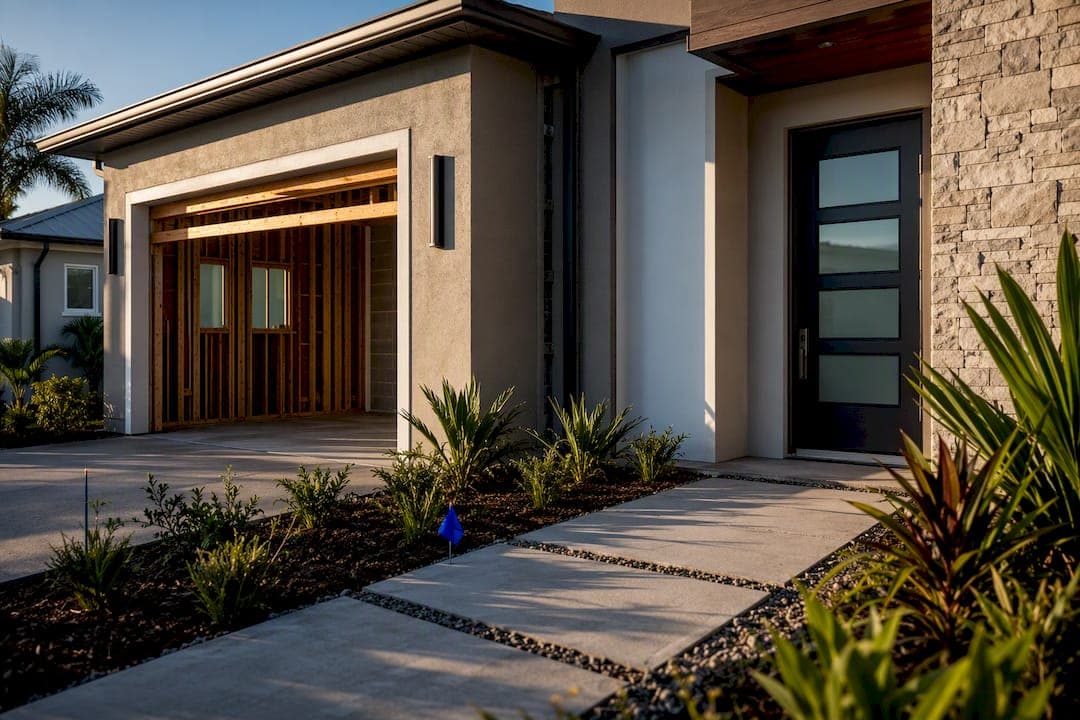
The renovations that most reliably add resale value fall into a short list: exterior replacements like garage doors, entry doors, and siding, a minor kitchen remodel, targeted bathroom updates, decks, roofing, and fresh curb appeal. The prioritization rule that governs all of it is simple: fix safety, structural, and functional defects first, then address curb appeal, then scale kitchen and bath work to match the neighborhood. Actual return varies by market, price tier, and execution quality, based on findings from the 2025 Remodeling Impact Report and Zonda's Cost vs. Value data.
TL;DR:
- A minor kitchen remodel often outperforms luxury upgrades because appraisers compare your home to similar nearby properties, not your receipts.
- Prioritizing condition repairs, curb appeal, and matching renovation scope to neighborhood standards reduces over-improvement and maximizes resale value.
- Projects like swimming pools and highly personalized rooms tend to underperform unless valued for personal enjoyment rather than future resale.
- Permitted work and local building code compliance are crucial, as unpermitted renovations often face appraisal, inspection, and legal issues during sale.
Table of Contents
- 1. Top Renovations That Reliably Add Resale Value
- 2. How to Prioritize Renovations for Your Home and Market
- 3. Typical Costs and Expected ROI Ranges
- 4. Renovations That Often Don't Pay Off (and When They Still Make Sense)
- 5. Getting Bids and Managing the Project Without Cost Creep
- 6. How Local Building Codes and Permits Affect Renovation Value
- 7. How Renovations Affect Home Insurance and Property Taxes
- 8. Common Mistakes That Reduce Renovation ROI
- 9. Timing Renovations Around Real Estate Market Cycles
- Balancing Resale Value With What You Actually Want From Your Home
- How NG Construction SWFL Can Help You Renovate With Resale in Mind
- Sources
- FAQ
1. Top Renovations That Reliably Add Resale Value
Buyers and appraisers do not reward every upgrade equally, and the data on which projects pay back consistently points in the same direction: visible, lower-risk exterior work tends to outperform expensive interior overhauls.
Garage door replacement, steel entry door replacement, and manufactured stone veneer sit at the top of Zonda's rankings almost every year, and the 2025 edition is no exception. Garage door replacement recouped roughly 267.7% of its cost nationally, followed by steel entry door replacement at about 216.4% and manufactured stone veneer near 207.9%. Eight of the top ten projects in that report are exterior replacements, which tells you something important: buyers form their opinion of a home before they walk through the front door, and appraisers price in that first impression.

A minor kitchen remodel, meaning cabinet refacing rather than a full gut renovation, new countertops, and an appliance refresh, tends to outperform a luxury kitchen overhaul in most neighborhoods. The reason is straightforward: a $150,000 kitchen in a $350,000 house does not appraise for what it cost to build, because the appraiser compares your home to similar homes nearby, not to your receipts.
Bathroom upgrades split into two camps depending on the seller's timeline. A cosmetic refresh, new vanity, updated fixtures, fresh tile in one section, works well for owners selling within a year. A full primary bathroom remodel makes more sense for owners staying five or more years who want the daily comfort and are willing to accept a longer payback horizon.
Adding usable square footage through a finished basement or a new deck is one of the more cost-effective ways to expand livable space without the expense of a full addition. Decks in particular deliver strong perceived value relative to their cost, since they read as outdoor living space at a fraction of the price of expanding the home's footprint.

Energy and mechanical upgrades, HVAC replacement, new windows, added insulation, do not always show up at the top of ROI charts, but they reduce buyer risk in ways that matter during negotiations. A buyer who sees a ten-year-old HVAC system will often ask for a credit or a price reduction, so replacing it before listing can prevent that conversation entirely.
Curb appeal quick wins round out the list and often deliver the best return per dollar spent:
- Fresh exterior paint on the house and trim.
- Basic landscaping cleanup, mulch, trimmed hedges, a mowed lawn, and guidance from this landscape planning guide.
- A new or repainted front door.
- Updated address numbers and a modern mailbox.
- Exterior lighting fixtures that make the entry feel welcoming after dark.
Consumer Reports backs this approach directly, noting that prioritizing condition and curb appeal through paint, landscaping, and exterior fixes improves marketability and helps homes sell faster, even when the dollar-for-dollar ROI looks modest on paper.
Pro Tip: Handle exterior replacements and curb appeal before touching the kitchen. They cost less, finish faster, and shape a buyer's first impression before they ever see your countertops.
2. How to Prioritize Renovations for Your Home and Market
Not every home needs the same renovation plan, and the right sequence depends on three factors working together rather than any single number.
- Expected resale uplift: how much a project is likely to move your sale price or shorten your days on market, based on what similar homes in your area have sold for recently.
- Execution risk: how likely the project is to go over budget, miss deadlines, or reveal hidden problems once work starts, which matters more for older homes and structural changes.
- Timing to sale: whether you are listing in three months or living in the house for another decade, since that changes which projects are worth the disruption.
Local comps and appraisal data should drive the decision more than trends or personal taste. Reviewing recent sales in your price tier and asking a realtor what buyers keep mentioning during showings gives you a far more reliable signal than a national ranking. Guidance on using appraisal data to prioritize renovations points to the same principle: appraisers reconcile your home's features against nearby comparables, so upgrades that match what those comparables already have get rewarded, while upgrades that outpace them often get capped.
Price-tier guidance matters here too. A midrange kitchen refresh fits a starter or move-up home, while a luxury kitchen with commercial-grade appliances only makes sense in a home already priced to support it. Installing finishes that exceed what neighboring homes offer is one of the fastest ways to overspend without a matching return.
Before any cosmetic decision, run through a short must-fix checklist. Roof condition, signs of water intrusion, outdated electrical panels, and plumbing issues should always take priority over paint colors or backsplash tile, because buyers and their inspectors will flag these first, and lenders can require repairs before closing.
3. Typical Costs and Expected ROI Ranges
Cost and return vary widely by project and region, but the national benchmarks give sellers a realistic starting point for budgeting.
- Garage door replacement: modest cost with a national cost recoup near 267.7%, making it one of the highest-return projects available.
- Steel entry door replacement: low cost with roughly 216.4% recouped, and NAR's data separately notes some steel door projects recovering 100% of cost according to REALTOR® estimates.
- Manufactured stone veneer: mid-tier cost with about 207.9% recouped, among the strongest exterior returns tracked.
- Minor kitchen remodel: return percentages vary by source and market, with some renovation ROI guides citing ranges in the 70 to 112 percent band for midrange scope.
A garage door replacement often returns more than double its cost, according to Zonda's Cost vs. Value report, making it one of the few renovations that can pay for itself and then some.
Bathroom remodels, roofing, deck additions, and basement finishes all fall into wide ranges because regional labor costs, material choices, and buyer expectations differ so much from one market to another. A basement finish in a region where finished basements are standard will recoup far more than the identical project in a market where buyers do not expect one.
The 30% rule offers a useful budgeting guardrail: keep total renovation spending within roughly 30% of your home's current market value to avoid over-improving relative to what the neighborhood supports. Applied practically, a homeowner with a $20,000 budget might focus entirely on curb appeal and a minor kitchen refresh. A $50,000 budget typically covers a full kitchen update plus a bathroom refresh or new roof. A $100,000 budget starts to open up a primary bathroom remodel alongside kitchen work, though at that level the return depends heavily on whether the home's price tier can support it.
ROI figures are ranges rather than guarantees because so many variables sit outside the renovation itself: local buyer demand, the timing of the sale relative to market cycles, the quality of the contractor's work, and the risk of over-improving beyond what neighboring homes justify.
4. Renovations That Often Don't Pay Off (and When They Still Make Sense)
Some projects consistently underperform on resale even when they cost a great deal to complete.
- Highly customized rooms, such as home theaters, wine cellars, or specialty hobby spaces, appeal to a narrow slice of buyers and rarely recoup their build cost.
- High-end finishes that exceed the neighborhood standard, like imported marble or commercial-grade kitchen equipment in a modest home, often get capped by the appraisal regardless of what they cost.
- Swimming pools in colder climates or in neighborhoods where few homes have them tend to add maintenance concerns for buyers rather than value.
- Overly personalized landscaping or structural additions that do not match the architectural style of the home can actually narrow the buyer pool.
These low recoup percentages come down to the same principle every time: appraisers and buyers compare a home to what else is available nearby, not to what the owner spent. For homeowners planning to stay in the home for many more years, that math changes. A custom home theater or a lap pool might never pay for itself at resale, but it can be worth building anyway if daily enjoyment matters more than the eventual sale price.
5. Getting Bids and Managing the Project Without Cost Creep
Choosing the right renovation only pays off if the work gets done properly, on schedule, and within budget.
- Standardize every bid onto the same scope sheet covering materials, specific appliance models, allowance versus fixed line items, and timeline, so you are comparing equivalent proposals rather than guessing at what each contractor actually included.
- Use free estimates deliberately: request a written breakdown of labor, materials, and timeline rather than a single lump number, so you can spot where costs might shift later.
- Track milestone inspections, including permit approval, structural or foundation sign-off, rough-mechanical inspection, and a finish-phase punch list, to catch problems before they become expensive to fix.
- Insist on a written workmanship guarantee in the contract, since a documented warranty gives future buyers confidence and protects you if something surfaces after the work is done.
Pro Tip: Ask every bidder for the same standardized scope sheet before comparing prices. A lower number on a vaguer bid usually means missing line items, not a better deal.
6. How Local Building Codes and Permits Affect Renovation Value
Permitted work carries more weight with buyers, appraisers, and lenders than unpermitted work, even when the finished result looks identical. An appraiser typically will not credit square footage or a room conversion that was never permitted, and a buyer's inspector or title search can flag missing permits during closing, which delays or derails a sale.
Building codes also set the floor for what counts as a legitimate renovation rather than a liability. Electrical, plumbing, and structural work that skips inspection can create disclosure problems at resale, since sellers are typically required to disclose known code violations. Permit requirements vary significantly by city and county, covering everything from setback rules for additions to energy code requirements for new windows and insulation, so what is allowed and what is required depends entirely on local jurisdiction rather than any national standard.
For sellers, the safest approach is treating permits as part of the renovation budget and timeline rather than an optional step. A properly permitted kitchen remodel or room addition holds its value at appraisal and removes a common objection during buyer due diligence, while unpermitted work can force a price reduction or a post-closing dispute.
7. How Renovations Affect Home Insurance and Property Taxes
Most renovations trigger some change to a home's insured value and its assessed value for property tax purposes, though the size of that change depends heavily on the project and the jurisdiction. A new roof, updated electrical panel, or replaced plumbing can sometimes lower insurance premiums, since insurers price risk based on the age and condition of major systems.
Larger renovations, room additions, finished basements, or full kitchen and bath remodels, tend to increase a home's assessed value once the local tax assessor's office becomes aware of the work, which usually happens through the permitting process. That reassessment can raise the annual property tax bill, sometimes starting the tax year after the work is completed.
Because these rules differ by state, county, and even insurance carrier, it is worth confirming the specific impact with your local assessor's office and insurance agent before finalizing a renovation budget, rather than assuming a uniform national rule applies.
8. Common Mistakes That Reduce Renovation ROI
Several recurring mistakes quietly erode the return on an otherwise well-planned renovation.
Over-improving relative to the neighborhood is the most common one: installing finishes or square footage that outpace what nearby comparable homes support caps the appraised value regardless of what the project cost. Skipping permits to save time or money is a close second, since it creates disclosure issues and can force costly rework at resale.
Choosing scope based on personal taste rather than local buyer expectations also drags down returns, particularly with bold paint colors, unusual layouts, or highly specific built-ins that narrow the buyer pool. Underestimating the must-fix list, roofing, water intrusion, electrical, and plumbing, in favor of cosmetic upgrades is another frequent misstep, since buyers and inspectors will surface those issues regardless of how nice the kitchen looks.
Finally, hiring based on the lowest bid without comparing scope in detail often leads to change orders that erase the budget advantage entirely. Avoiding these mistakes comes down to matching scope to the neighborhood, permitting everything, and comparing bids on equal terms.
9. Timing Renovations Around Real Estate Market Cycles
Market conditions shift how much a renovation is worth at the time of sale, independent of the renovation itself. In a seller's market with low inventory, buyers are often willing to accept a home closer to its current condition, which means cosmetic and curb-appeal work can carry a listing further than a major remodel would. In a buyer's market with more competition among sellers, a well-executed kitchen or bathroom update can be the difference that gets a home noticed among similar listings.
Seasonal timing matters too. Exterior projects like siding, roofing, and landscaping are easier to schedule and show off in spring and summer, while interior work like kitchens and bathrooms can proceed year-round without weather dependency. Sellers planning to list in a specific season should work backward from that date, allowing extra time for permitting and inspections rather than compressing the schedule and risking rushed work.
Balancing Resale Value With What You Actually Want From Your Home
Sellers and long-term owners are solving different problems, and treating them the same leads to bad decisions either way. If you are selling within a year or two, the math favors low-risk, highly visible projects: curb appeal, a minor kitchen refresh, a repainted exterior. If you are staying, comfort and daily use deserve more weight than what an appraiser will eventually credit.
A short checklist helps clarify which camp you are in: are you listing within eighteen months, is your current layout genuinely limiting daily life, and would you be disappointed if you never recouped the cost. Two or more "yes" answers toward staying suggests prioritizing enjoyment over resale math.
Whichever camp you fall into, the sequence rarely changes: fix condition issues first, then curb appeal, then scale kitchen and bath work to match what your neighborhood and your own life actually call for.
— Alston
How NG Construction SWFL Can Help You Renovate With Resale in Mind
Choosing the right project is only half the equation. Getting it built correctly, on schedule, and within the budget you planned for is what actually protects the return. A construction company manages renovations, kitchen and bath remodeling, room additions, and whole-home interior remodeling for homeowners across various locations, handling every phase from initial design through final inspection under one accountable, certified team.

That structure matters most on the exterior and kitchen projects that tend to drive the strongest resale returns, since coordinating design, permitting, and construction under one team reduces the handoff gaps where costs and timelines usually slip. Projects may include workmanship guarantees, helping to reassure future buyers during a sale.
If you are weighing which renovation to fund first, request a free, no-obligation estimate and get a scoped plan built around your home, your neighborhood, and your resale timeline.
Sources
- Zonda's 38th Annual Cost vs. Value Report confirms exterior projects continue to deliver the highest ROI
- 2025 Remodeling Impact Report
- Consumer Reports — 8 ways to boost your home value
FAQ
What renovation adds the most value to a house?
Exterior replacements tend to add the most value relative to cost, with garage door replacement recouping roughly 267.7% nationally. Steel entry door replacement and manufactured stone veneer follow closely behind, and all three outperform most interior remodels on a pure cost-recouped basis.
What is the 30% rule for renovations?
The 30% rule is a budgeting guideline suggesting homeowners keep total renovation spending within about 30% of their home's current market value. Staying within that range helps avoid over-improving beyond what the neighborhood and local comps can support.
What adds $100,000 to your house?
No single renovation reliably adds a fixed dollar amount, since resale value depends on local comps, price tier, and market timing rather than the project alone. A well-executed kitchen and bathroom remodel paired with strong curb appeal, sized to match the surrounding neighborhood, is the combination most likely to move a home's value meaningfully upward.
Do bathroom remodels pay off at resale?
A cosmetic bathroom refresh, new fixtures, vanity, and tile, tends to pay off well for sellers on a shorter timeline, while a full primary bathroom remodel suits owners planning to stay long enough to enjoy the upgrade regardless of resale timing. Return depends heavily on matching the scope to what comparable homes in the area already offer.
Should I renovate before selling or leave it to the buyer?
Fixing condition issues like roofing, water intrusion, and electrical problems before listing is almost always worth it, since buyers and inspectors will flag them anyway. Cosmetic and curb-appeal work, paint, landscaping, minor kitchen updates, also tends to help a home sell faster, while larger luxury renovations are better left for the buyer to choose themselves.