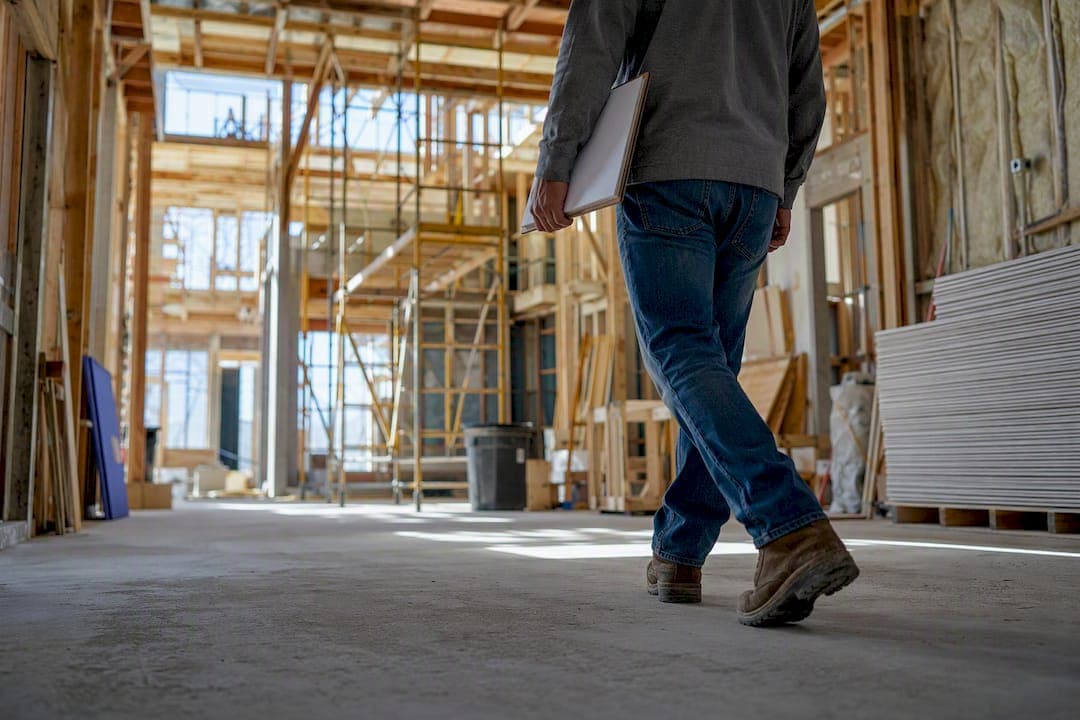
Project closeout is the formal transfer of care, custody, and control of a facility to the owner once every contractual requirement, document, inspection, and payment obligation is complete. A closeout is only finished when three milestones are behind you: substantial completion, Certificate of Occupancy or AHJ acceptance, and final payment. Get those three right, and the owner walks into a fully documented, fully functioning building without significant issues unresolved.
TL;DR:
- Properly scheduling and documenting each closeout task, including punch-list resolution, warranties, and final inspections, is essential to avoid payment delays.
- Conducting early and continuous collection of warranties, manuals, and as-built drawings prevents last-minute scrambling and accelerates the entire process.
- Scheduling and verifying final AHJ inspections, occupancy approvals, and owner training before demobilization helps ensure timely release of retainage and final payments.
- Clear responsibility assignment among contractors, subcontractors, and design team, recorded in writing, prevents disputes and streamlines closing procedures.
- Building closeout requirements into project specifications from the start reduces delays and ensures a smoother, faster project completion.
Table of Contents
- What Is a Complete Project Closeout Checklist?
- What Is the Step-by-Step Closeout Process?
- Who Owns Which Closeout Documents?
- Who Is Responsible for Each Closeout Task?
- What Are the Most Common Closeout Mistakes?
- How Long Does Closeout Take and What Does It Cost?
- How Does NG Construction SWFL Handle Closeout?
- Where Can You Find Closeout Templates and AHJ Guidance?
- Why Most Closeout Advice Misses the Real Problem
- Ready for a Closeout Process That Doesn't Chase You Down
- Sources
What Is a Complete Project Closeout Checklist?
A closeout checklist is only useful if it triggers action, not just paperwork. Each item below should have a name attached to it and a deadline, not just a checkbox.
Here is the sequence that governs whether retainage gets released and final payment clears:
- Substantial Completion certificate (AIA G704) — the architect signs, the owner countersigns, and the warranty clock starts. GC action: schedule the walkthrough and submit the form for signature.
- Punch-list resolution — every item gets fixed, verified, and initialed off. GC action: assign each item to a specific sub with a completion date, not a general "TBD."
- As-built drawings — final redlines incorporated into a clean record set. Subcontractor action: submit marked-up field drawings before demobilizing.
- O&M manuals — equipment data, maintenance schedules, and contacts compiled by system. Subcontractor action: deliver manuals before final invoice submission.
- Warranties — manufacturer and installer warranties with start dates tied to substantial completion. Subcontractor action: confirm the warranty period begins at substantial completion, not contract signing.
- Test reports and commissioning records — HVAC balancing, fire alarm acceptance, electrical testing. Commissioning agent action: deliver signed reports before training sessions.
- CO/AHJ approvals — the local building department signs off on occupancy. GC action: schedule final inspections weeks ahead, not the week you need the certificate.
- Unconditional lien waivers — every subcontractor and supplier waives lien rights tied to payment received. GC action: collect these before releasing final payment, not after.
- Final application for payment — the last pay app reconciling contract sum, change orders, and retainage. GC action: submit with the full document package attached, not separately.
- Owner training — walk facility staff through systems while the installing sub is still on-site. GC action: schedule training to overlap with commissioning, not after crews leave.
- Demobilization — equipment removed, site cleaned, keys and access credentials transferred. GC action: confirm the owner has full building access before crews leave for good.
Retainage release almost always waits on items 1, 8, and 9. Skip a lien waiver or delay the as-builts, and you risk having the retainage payment delayed for weeks due to a missing signature.
What Is the Step-by-Step Closeout Process?
Closeout does not start when the punch list gets written. It starts on day one, buried in your specifications and submittal log. Contractors who treat closeout as a final-week scramble are the ones struggling to get off the job on a meaningful share of their projects. Build the requirements into your contract documents early, and the last month of the project becomes verification instead of a chase.
Build closeout into the spec from the start
Reference the standard closeout specification sections in your contract documents before the first slab pours. Section 01 77 00 covers general closeout procedures, 01 78 23 covers O&M manuals, and 01 78 39 covers project record documents. Put these requirements into every subcontract, and you have contractual leverage to demand documents on your timeline instead of theirs.
- Add a closeout submittal log to your project management software at kickoff, not at 90% completion.
- Require subs to submit O&M data and warranties with their final pay application, not as a separate ask later.
- Set a rolling schedule for as-built markups so field drawings don't pile up into a two-week scramble at the end.
Pro Tip: Collect closeout deliverables continuously during construction rather than waiting until the finish line. It cuts your chase time dramatically and keeps a missing manual from becoming the reason a check sits on someone's desk for three weeks.
Run the substantial completion walkthrough
Substantial completion means the owner can use the space for its intended purpose, even if minor items remain unfinished. The architect typically leads this walkthrough alongside the GC and owner, documenting every deficiency on a punch list. This date matters more than most contractors treat it: it's the trigger for warranty periods, insurance handover, and retainage calculations, and it should never be signed casually.
Assign every punch-list item to a specific subcontractor with a hard date, then track resolution in writing. Verbal confirmations from a sub that "it's done" are not documentation. Get a signature or a photo with a timestamp.
Commission systems and schedule training concurrently
Commissioning verifies that HVAC, fire alarm, electrical, and life-safety systems actually perform as designed, not just that they're installed. Fire alarm systems typically require documented acceptance testing under NFPA 72 before an AHJ will sign off, and skipping that step is one of the most common reasons final inspections get pushed back a week or more.
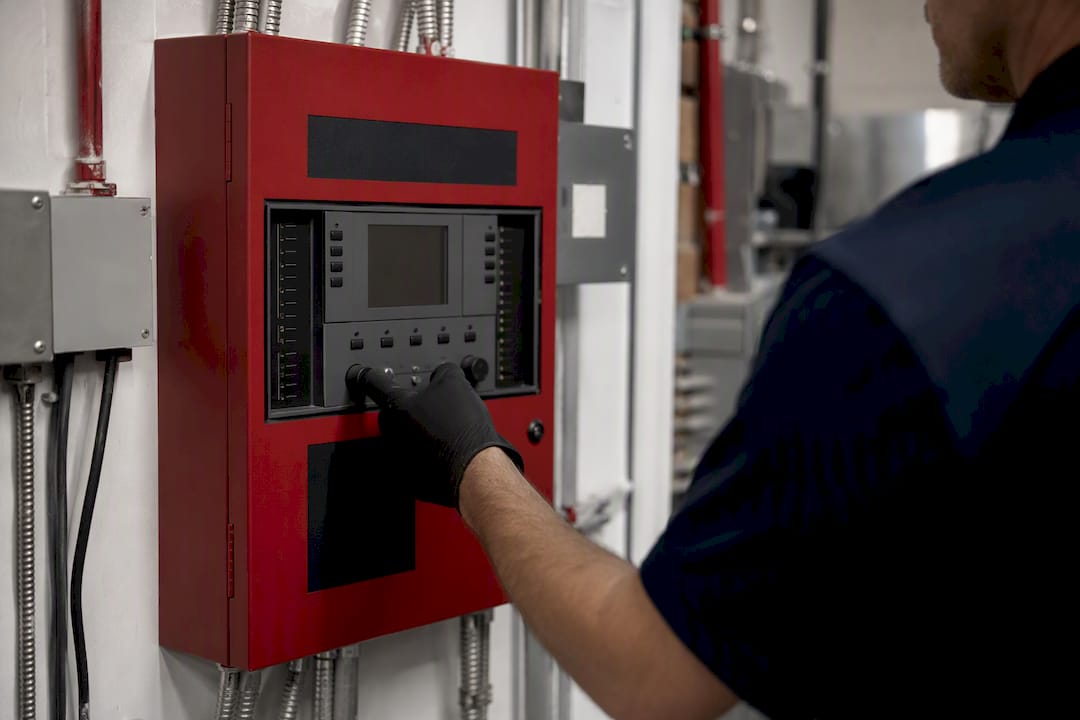
Schedule owner training while the installing subcontractor is still mobilized. Waiting until after demobilization means paying a trip charge for something that should have taken twenty minutes on-site. The WBDG commissioning guidance treats startup, testing, and training as one continuous sequence, not three separate events months apart.
Assemble and verify the documentation package
Collect as-built drawings, test reports, and O&M manuals in both hard copy and electronic format. Owners and AHJs increasingly reject packages that arrive in inconsistent formats or with sloppy file naming, so standardize your naming convention before subs start submitting files.

Accurate as-built documentation depends on precise field records from day one. A field guide to layout and control helps crews understand why survey accuracy during construction directly affects how usable the final as-built set is for facility staff years later.
Coordinate final inspections and obtain occupancy approval
Schedule your final AHJ inspection weeks in advance, not the week you need the certificate. Every jurisdiction runs its own final inspection checklist, and missing even one item on that local list means a re-inspection fee and a delay measured in days, sometimes weeks.
Submit final payment and demobilize
Submit your final application for payment with unconditional lien waivers from every subcontractor and supplier attached. Reconcile every change order against the contract sum before submitting; a disputed change order at this stage can stall the entire payment. Once payment clears and the owner confirms full access, demobilize equipment and trailers, and the warranty period officially begins.
Who Owns Which Closeout Documents?
Getting the documentation right the first time saves weeks of back-and-forth with an owner's facility team or a picky AHJ reviewer. Every document has a minimum content standard, and skipping it invites rejection.
O&M manuals (Section 01 78 23) need to include equipment cut sheets, maintenance schedules, spare parts lists, and manufacturer contact information organized by building system, not by trade. Label binders and electronic folders identically. Most owners want both a hard-copy binder for the facilities office and a searchable PDF set for their computerized maintenance system.
As-built drawings (Section 01 78 39) should carry a consistent file-naming convention across every discipline. This detail sounds minor until an owner's facility manager tries to find the plumbing riser diagram three years later and can't tell which of forty PDFs is current. Deliver both marked native files (if your contract requires them) and clean PDFs.
Warranties and manufacturer data need explicit start dates. Tie warranty periods to the substantial completion date, not the contract signing date, and state that connection in writing on the cover sheet of every warranty binder.
Certificates confuse more project teams than any other closeout document. The AIA G704 Certificate of Substantial Completion is a contractual document signed by the architect and owner marking the date the facility becomes usable; the Certificate of Occupancy is a legal document issued by the local Authority Having Jurisdiction confirming the building meets code for occupancy. They are not interchangeable, and confusing the two in your contract language creates real dispute risk over retainage release timing.
Lien waivers come in two forms, and the distinction determines when you get paid. A conditional waiver states that lien rights are released once payment clears; an unconditional waiver releases lien rights immediately upon signing. Most owners and title companies require unconditional waivers before releasing final payment, so verify local law on whether you can require payment to clear before accepting one.
By the Numbers: A structured closeout checklist organizes deliverables into three categories: administrative documents, financial closeout, and operational handover materials. Missing any one category is what usually stalls final sign-off, not any single missing form.
Who Is Responsible for Each Closeout Task?
Closeout disputes almost always trace back to unclear ownership, not bad faith. Assign these roles in writing before the project reaches substantial completion, not after someone assumes the wrong person is handling it.
- General contractor coordinates the punch list, collects every subcontractor document, verifies the package for completeness, and submits the final pay application.
- Subcontractors deliver their own warranties, O&M data, and as-built markups, and they complete every punch-list item assigned to their scope before requesting final payment.
- Design team (architect/engineer) certifies substantial completion on the AIA G704, reviews and approves punch-list closures, and confirms the facility matches contract documents.
- Owner attends walkthroughs, arranges the property insurance transition, and confirms final acceptance and payment release once documentation is verified complete.
- Vendors and equipment suppliers provide manufacturer warranties, startup documentation, and training support tied to their specific systems.
Record every sign-off in writing, with a date and a name, even for something as small as a punch-list item marked complete. Photo documentation with timestamps and email confirmations become the evidence that prevents a dispute six months later when someone claims a warranty never started or a fixture was never actually installed correctly.
What Are the Most Common Closeout Mistakes?
Most closeout failures are timing failures, not competence failures. The fix is almost always structural, not heroic effort in the final week.
- Late document collection turns closeout into a chase. Require rolling submittals throughout construction with monthly check-ins on outstanding items, not one giant ask at the end.
- Confusing completion milestones creates payment disputes. Define substantial completion and final completion explicitly in the contract, and use the AIA G704 format to remove ambiguity.
- Missing unconditional lien waivers delays payment by weeks. Start collecting conditional waivers with every progress payment so the final unconditional versions are a formality, not a scramble.
- Scheduling conflicts for commissioning and training waste trip charges and delay owner readiness. Reserve vendor windows early and overlap training with the final week of system testing.
- Slow owner sign-off stalls retainage release indefinitely. Set a specific response-time expectation in the contract and use staged acceptance for large facilities so partial areas can close out ahead of the whole building.
Pro Tip: Track outstanding closeout items in the same software you use for daily field reports. A punch item that lives in a separate spreadsheet is a punch item that gets forgotten.
How Long Does Closeout Take and What Does It Cost?
Punch-list closure typically runs from a few days for a small tenant build-out to several weeks on a large commercial project with multiple trades and complex systems. Final documentation assembly, if you've collected deliverables continuously, should take one to two weeks rather than the month-plus scramble that happens when everything gets requested at once.
Retainage norms vary by contract type. Private projects commonly hold back 5% to 10% of each payment, while public projects often cap retainage or follow specific federal payment rules under the FAR that govern release timing. That retained cash is real money sitting on the sideline, and every week of delayed closeout is a week that cash isn't in your account.
A delayed CO or AHJ inspection is one of the costliest closeout bottlenecks because it holds up final payment while your carrying costs, insurance, and bonding fees keep running. A few practical moves reduce that exposure:
- Schedule the AHJ final inspection request the moment you're confident of substantial completion, not after.
- Pre-inspect fire and life-safety systems internally before the official test to avoid a failed inspection and a re-inspection fee.
- Stage acceptance by building area on large projects so partial certificates of occupancy keep cash flow moving.
How Does NG Construction SWFL Handle Closeout?
Buildwithng manages every phase of a project from initial design through final inspection, which means closeout isn't a separate scramble bolted onto the end. It's built into how NG Construction SWFL runs a job from day one across Cape Coral, Fort Myers, Naples, Bonita Springs, and Estero.
That full-phase accountability, backed by a workmanship guarantee, is what lets homeowners and business owners hand off a finished project without chasing down warranties or missing manuals months later.
A simple closeout folder structure any project can adapt:
- Administrative: permits, certificates, punch-list sign-offs
- Financial: pay applications, lien waivers, retainage records
- Operational: O&M manuals, warranties, as-built drawings, training records
| Closeout Category | Core Deliverable | Owner Benefit |
|---|---|---|
| Administrative | Certificate of Occupancy, punch-list sign-off | Legal clearance to occupy |
| Financial | Unconditional lien waivers, final pay app | Clean payment record, no liens |
| Operational | O&M manuals, warranties, as-builts | Long-term maintenance readiness |

If you're planning a custom build or major renovation in Southwest Florida and want a contractor who treats closeout as part of the plan rather than an afterthought, Buildwithng offers free, no-obligation estimates to walk through what turnkey handover looks like for your project.
Where Can You Find Closeout Templates and AHJ Guidance?
A handful of sources are worth bookmarking before your next closeout. The USC Facilities Planning closeout checklist gives you a structured template covering administrative, financial, and operational deliverables you can adapt to any project size. Procore's closeout library breaks the entire process into stepwise activities with clear responsibility assignments, useful for training newer project managers on sequencing. WBDG's commissioning guidance is the reference to pull sample commissioning checklists and startup documentation standards from. Autodesk's closeout guide is worth reading for the discipline argument alone: proactive, rolling collection beats end-of-project scrambling every time. And for final inspections, check your specific city's Authority Having Jurisdiction page, like Austin's final inspection checklist, since requirements shift by jurisdiction and a generic checklist will miss local specifics.
Why Most Closeout Advice Misses the Real Problem
Most closeout guidance treats it as a documentation exercise: gather the forms, get the signatures, done. That undersells what actually goes wrong. The real failure point is timing, not paperwork competence. Contractors who wait until substantial completion to start assembling O&M manuals and chasing lien waivers are the ones stuck for weeks with retainage locked up over a missing signature.
The conventional advice to "start your punch list early" is true but incomplete. Closeout planning belongs in your specifications and submittal log from the day you sign the contract, not the day the last coat of paint dries. If you prioritize one thing from this guide, make it the rolling collection habit: gather warranties, manuals, and as-builts as each system gets installed, not at the finish line. Everything else, from faster CO approval to quicker final payment, follows from that single discipline.
— Alston
Ready for a Closeout Process That Doesn't Chase You Down
Buildwithng handles closeout the way it should be handled: built into the schedule from day one, not scrambled together in the final week. For homeowners and business owners across Cape Coral, Fort Myers, Naples, Bonita Springs, and Estero, that means custom builds, renovations, and commercial build-outs finish with a complete documentation package, a clean final payment process, and a workmanship guarantee backing every phase of the work.
If your project is a custom home build, a full renovation, or a commercial build-out and you want a contractor who manages design through final inspection under one roof, request a free, no-obligation estimate from Buildwithng and ask directly how they structure turnkey closeout and turnover for a project like yours.