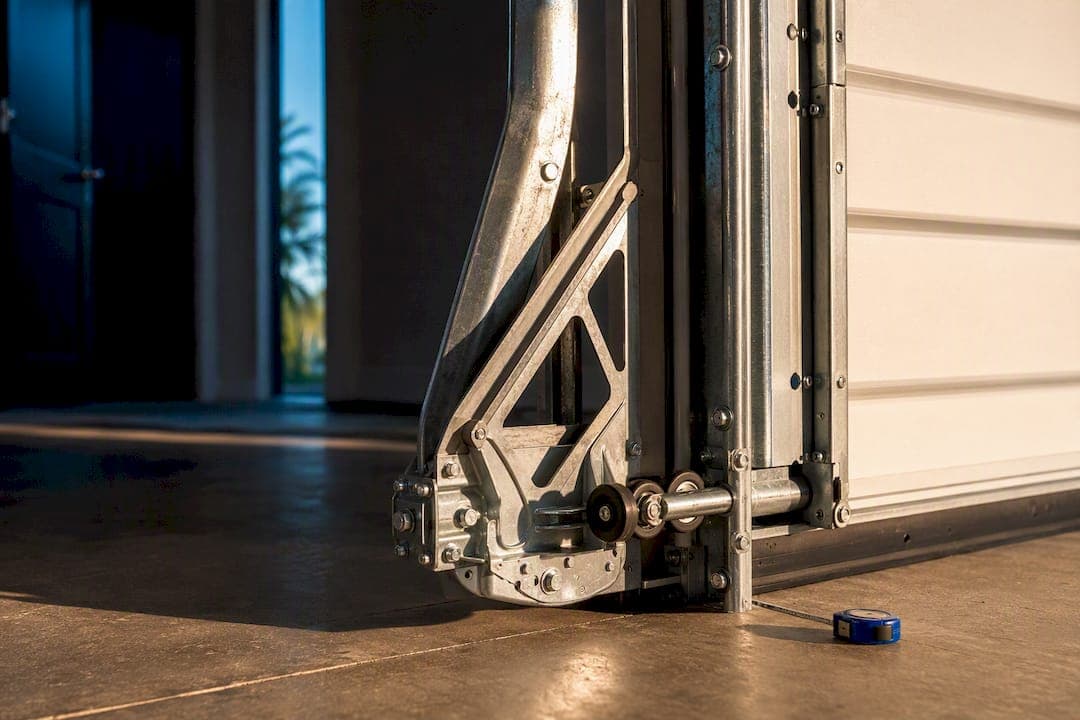
Yes, hurricane rated garage doors exist, and they are the standard way to stop wind and debris from turning your garage into the weak point in your home's storm defense. These doors carry wind load or impact ratings tied to a specific design pressure, measured in pounds per square foot, and verified through local building code approvals. Before buying or replacing one, confirm the required design pressure for your address and check the door's compliance sticker and paperwork. If either is missing or unclear, a licensed installer or engineer can verify the rating and handle permitting.
TL;DR:
- Most hurricane-rated garage doors are steel with reinforcement and have specific design pressure ratings, verified through local codes and documentation.
- Impact-rated doors are tested against debris impact, often needed in areas with high wind velocities, whereas wind load-rated doors resist pressure without impact testing.
- Confirm your home's required design pressure and file the appropriate paperwork, such as compliance stickers, NOA, or wind-load drawings, before installation.
- Cost ranges from $1,200 to $6,000 for single doors and up to $10,000 for double doors, influenced by impact features, size, and local requirements.
- Verifying existing garage doors involves checking for manufacturer stickers, requesting documentation, and consulting with licensed installers or building officials.
Table of Contents
- What Makes a Garage Door Hurricane Rated?
- How Do Codes and Testing Standards Work?
- What Materials and Features Should You Compare?
- How Much Does a Hurricane Rated Garage Door Cost?
- How Can I Tell If My Garage Door Is Already Rated?
- What Should You Ask Before Buying or Installing One?
- How Buildwithng Supports Hurricane Door Projects
- Why Garage Door Compliance Deserves Priority
- Ready to Upgrade Your Garage Door Before Storm Season?
- Standards and Documents to Bring to a Permit Office
- Sources
- FAQ
What Makes a Garage Door Hurricane Rated?
A hurricane rated door falls into one of two categories, and the difference matters more than most homeowners realize. Wind load rated doors resist pressure. Reinforced tracks, thicker steel, and heavier hardware keep the door from bowing or ripping off its rails when wind pushes against it. Impact rated doors go further and are tested against flying debris, like a 2x4 launched at speed, in addition to pressure.
A door can be one or the other, or both, depending on the product and the zone it's built for. In hurricane-prone regions, especially near the coast, many local codes require both.
This distinction matters because garage doors are consistently the entry point where wind damage starts. Once a garage door fails, wind pressure builds inside the structure and can lift the roof or blow out walls, which is why Wayne Dalton's wind load guidance treats these doors as a structural priority, not a cosmetic upgrade.
- Wind-load rated: resists structural pressure, often confused with full protection
- Impact rated: resists pressure and debris strikes, required in high-velocity zones
- Dual rated: meets both standards, common in coastal Florida installations
How Do Codes and Testing Standards Work?
Design pressure, expressed in pounds per square foot (PSF), is the number that actually matters, not wind speed alone. Manufacturers publish PSF ratings because that figure reflects how the door performs under real structural load, factoring in your home's height, exposure, and geographic zone. A door rated for 45 PSF in an open coastal lot will not perform the same on a sheltered inland lot, which is why the rating is specific to the opening, not a generic label.
Several code frameworks and test protocols govern what "rated" actually means:
- Florida Building Code (FBC) sets baseline wind-load requirements by region
- Miami-Dade Notice of Acceptance (NOA) certifies products for high-velocity hurricane zones
- Texas Department of Insurance (TDI) approval covers coastal Texas installations
- ASTM E1996 and E1886 test large missile impact and cyclic pressure performance
- TAS 201, 202, and 203 are the Florida test protocols behind most NOA approvals
- DASMA publishes technical references manufacturers cite on product labels
Fewer than half of homeowners in hurricane zones know their garage door has to meet a specific code requirement at all, according to Wayne Dalton. That gap explains why so many storm-damaged garages turn out to have never met local code in the first place. Your local building department or a structural engineer determines the exact PSF required for your opening. Never assume a door rated for a neighboring county's code applies to yours.
What Materials and Features Should You Compare?
Steel sectional doors with internal reinforcement are the most common hurricane-rated option, and for good reason: they balance strength, cost, and repairability better than most alternatives. Aluminum and full-view glass doors offer a more modern look but typically need heavier framing and Miami-Dade NOA certification to hit the same impact standards, particularly for glass garage doors used in high-velocity zones.
Insulation adds another layer of decision-making. A polyurethane-insulated door improves both storm rigidity and energy performance, expressed in R-value or U-factor, but it costs more upfront than a single-layer steel panel.
- Reinforced steel sectional doors with horizontal bracing
- Insulated steel or aluminum doors for thermal performance plus storm strength
- Full-view glass doors with NOA and TAS-tested framing
- Storm panels or fabric shields as a lower-cost supplement when full replacement isn't immediate
Pro Tip: A reinforced door doesn't have to look industrial. Amarr and other manufacturers now build storm-rated panels that are visually identical to standard residential doors, so you're not trading curb appeal for protection.
How Much Does a Hurricane Rated Garage Door Cost?
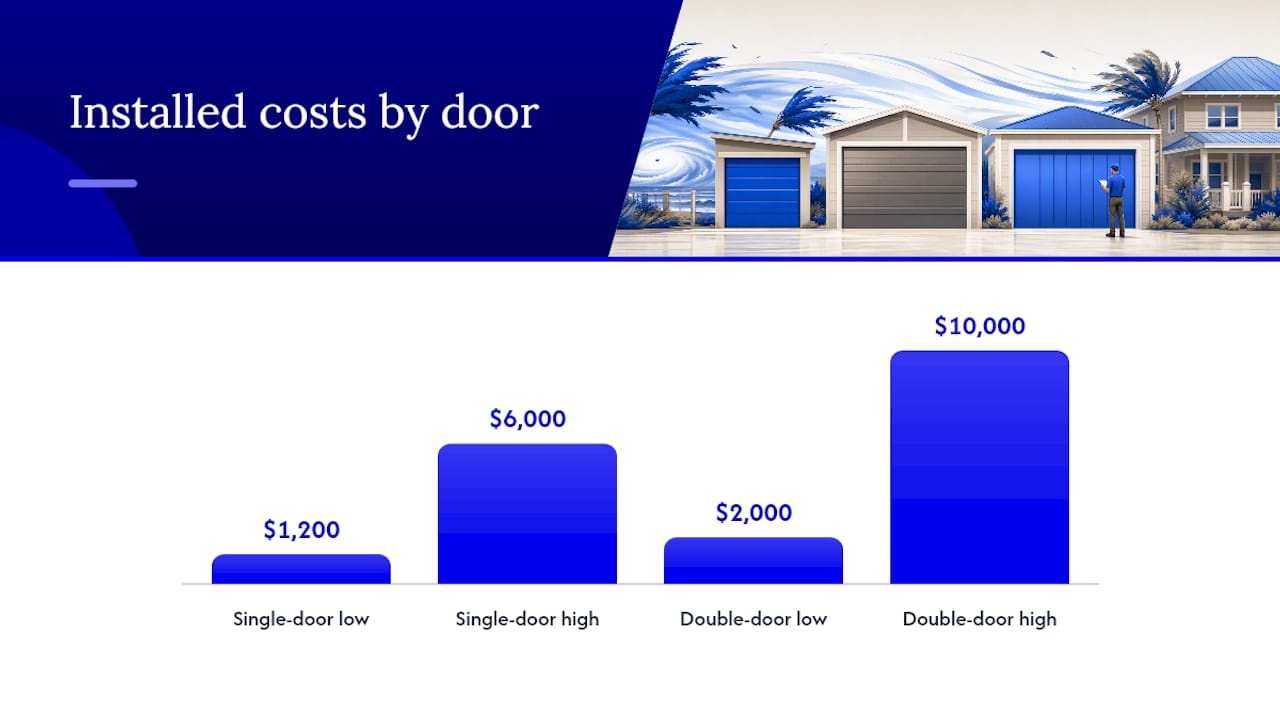
Installed costs vary widely based on size, material, and required design pressure. HomeGuide's cost survey puts single-door installations at roughly $1,200 to $6,000, with double doors running $2,000 to $10,000, including labor.
A few factors push you toward the higher end of that range:
- Impact-rated glazing or full-view glass panels add significant cost over standard steel
- Larger openings and double-wide doors require heavier reinforcement and more labor
- Higher required design pressures (common in direct coastal exposure) mean thicker materials
- Permit fees and inspection costs, which vary by county
The upside: many insurers offer premium discounts for verified wind-mitigation upgrades, and a documented hurricane-rated door often qualifies. The Florida CFO's consumer guide on hurricane-loss mitigation outlines how documentation, not just the upgrade itself, drives the savings.
How Can I Tell If My Garage Door Is Already Rated?
Before assuming your existing door needs replacing, check what's already there. Verification takes three steps.
- Find the manufacturer's compliance sticker, usually on the inside of the door or on a track bracket, listing the model number and design pressure rating.
- Request the wind-load drawing or NOA paperwork from the original dealer or installer if the sticker is missing or illegible. Manufacturers keep these records tied to the model number.
- Bring photos and measurements to a licensed installer or your local building department if you can't locate any documentation. They can identify the door or confirm it needs to be replaced to meet current code.
Skipping this step is the single most common mistake homeowners make when filing an insurance claim after a storm. No sticker, no drawing, no discount.
What Should You Ask Before Buying or Installing One?
Choosing the right door starts with a short checklist, and skipping any item on it is how homeowners end up with the wrong product installed.
- Confirm the exact PSF or design pressure required for your address, not a neighborhood average
- Decide whether you need wind-load only, impact-rated, or both
- Verify the product carries the relevant approval (FBC, Miami-Dade NOA, or TDI) for your county
- Specify corrosion-resistant hardware if you're within a few miles of saltwater exposure
Ask your dealer directly for the wind-load drawings and product approval documents before signing anything, not after installation. A legitimate installer will hand these over without hesitation. Permits typically require the design pressure rating, the product approval number, and a site plan showing the opening. A missing permit, or a dealer who waves off the paperwork request, is a red flag worth walking away from.
Pro Tip: If a dealer can't produce a Miami-Dade NOA number or a wind-load drawing on request, treat that as a dealbreaker, not a formality. That paperwork is what your insurer and building inspector will ask for later.
How Buildwithng Supports Hurricane Door Projects
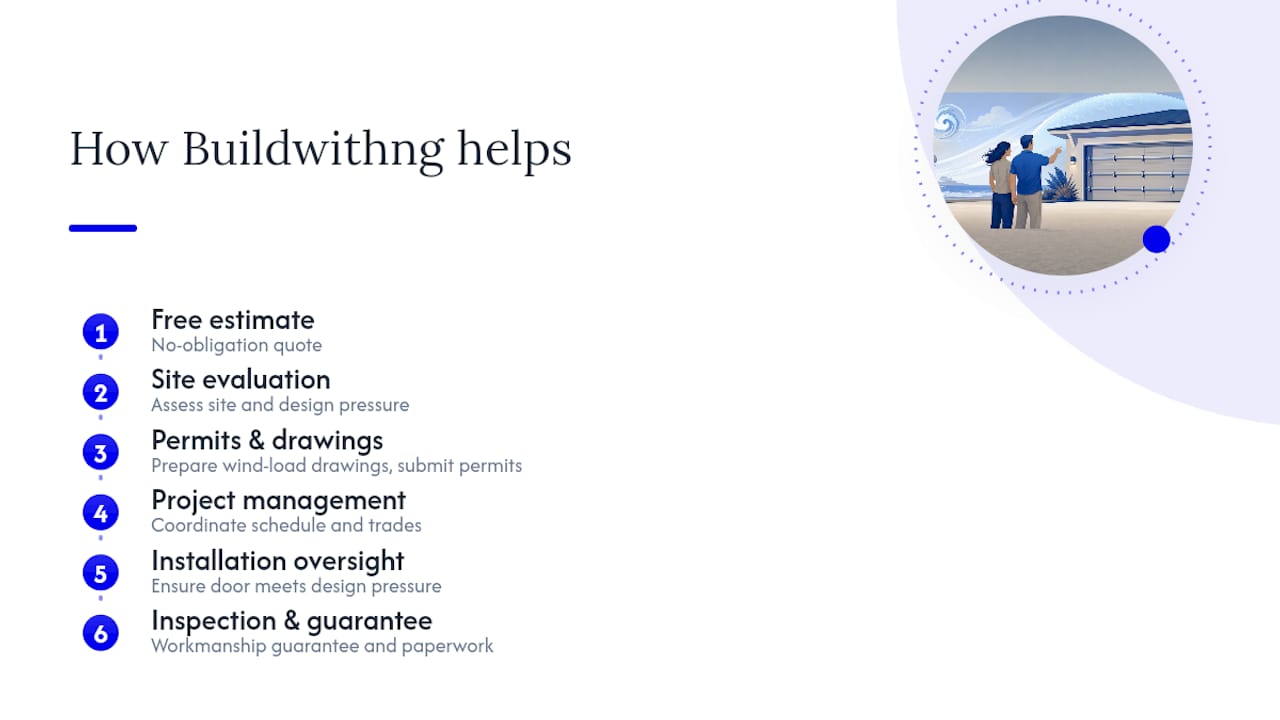
Some contractors handle hurricane-rated garage door projects as part of broader renovation and building work,, offering free, no-obligation estimates and full project management from evaluation through final inspection. This can include coordinating wind-load drawings, submitting permit paperwork to the local building department, and overseeing installation to match the design pressure required by the home. Projects may be backed by a workmanship guarantee, providing homeowners with a documented paper trail for insurers and inspectors.
Why Garage Door Compliance Deserves Priority
Garage doors get overlooked because they don't look structural, but they're often the first failure point in a storm. If you're in a wind zone and unsure about your door's rating, that's worth resolving before hurricane season, not during it. Pull the sticker, call your building department, and keep the paperwork.
— Alston
Ready to Upgrade Your Garage Door Before Storm Season?
If you've read this far, you already know the hard part isn't picking a door style. It's confirming the right design pressure, tracking down NOA or wind-load paperwork, and getting permits approved without delays. Buildwithng handles all three as part of one project, not three separate headaches.

Buildwithng manages hurricane-rated garage door replacements and retrofits from start to finish for homeowners across Cape Coral, Fort Myers, Naples, Bonita Springs, and Estero. That means a site evaluation to determine your required design pressure, collecting the documentation your permit office and insurer will ask for, overseeing installation, and standing behind the finished work with a workmanship guarantee. You're not left chasing paperwork after the fact. If your garage door hasn't been checked against current code, request a free estimate from NG Construction SWFL and get a clear answer on what your home actually needs.
Standards and Documents to Bring to a Permit Office
Keep these on hand when applying for permits or requesting insurance discounts:
- Manufacturer's compliance sticker with model number and PSF rating
- Miami-Dade NOA or TDI approval documentation, where applicable
- Wind-load drawings referencing ASTM E1996/E1886 or TAS 201/202/203
- Florida homeowners can also review permit requirements that overlap with storm-hardening upgrades
Sources
- Wind Load Garage & Commercial Doors — Wayne Dalton
- How Much Does a Hurricane Garage Door Cost? — HomeGuide
- Hurricane Impact Glass Garage Doors | Miami-Dade NOA Certified — bp Glass Garage Doors
FAQ
Are There Hurricane Rated Garage Doors?
Yes, wind load-rated and impact-rated garage doors are widely available and required by code in many coastal and hurricane-prone counties.
How Much Is a Hurricane Rated Garage Door?
Installed costs typically run $1,200 to $6,000 for a single door and $2,000 to $10,000 for a double door, depending on material, size, and design pressure.
How Can I Tell If My Garage Door Is Hurricane Rated?
Check the manufacturer's sticker inside the door for the model number and design pressure rating, or request the wind-load drawing and NOA documentation from your original installer.
How Do I Hurricane Proof My Garage Door?
Replace or reinforce your door to meet the design pressure required for your address, verify it carries the relevant code approval, and keep the documentation for insurance and permitting purposes.