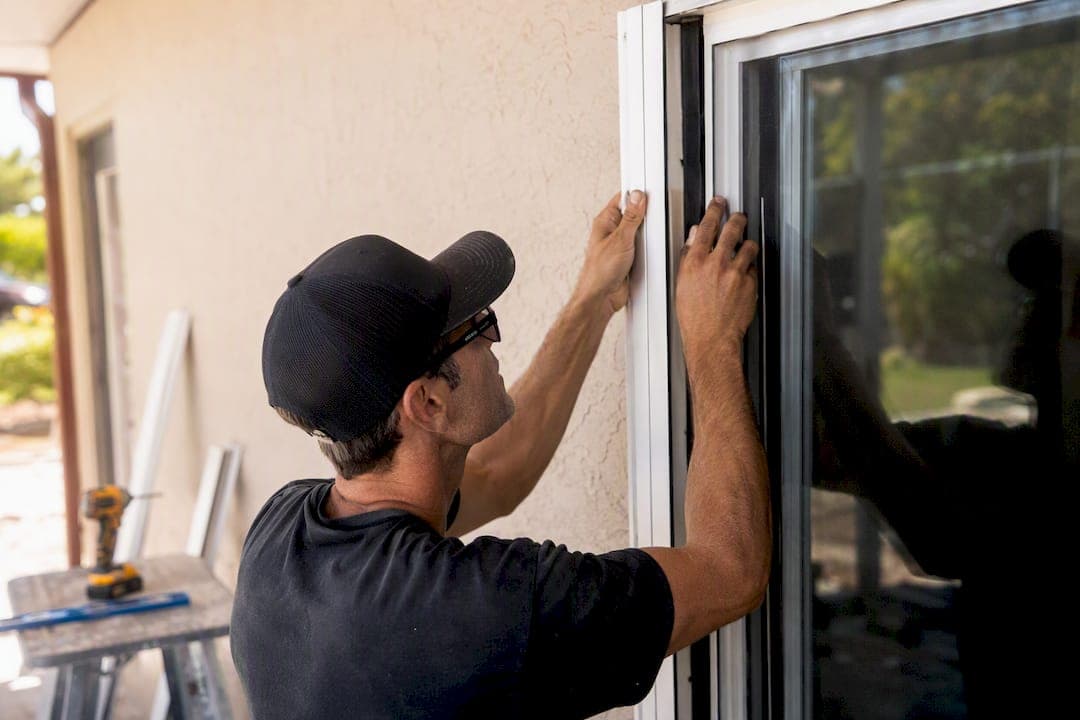
Most homeowners pay within a common range per window installed in 2026, with whole-home projects typically falling into a moderate to high total cost bracket depending on the number of openings, glass package, and frame material. Florida homes in high-velocity hurricane zones often sit at the upper end of that range, while inland properties with fewer code restrictions tend to land closer to the middle.
Here's the short version before we get into specifics:
- Entry-level vinyl windows start at a typical lower-cost range per opening.
- Premium architectural and impact-rated aluminum systems are priced at a higher range per window.
- A typical 12 to 18 opening home has a correspondingly higher total project cost.
- In HVHZ counties like Miami-Dade and Broward, insurance discounts and energy savings often shorten payback to under 10 years, sometimes even faster if your current windows are single-pane and outdated.
Whether that math works in your favor depends on your exposure zone, your current insurance premium, and how many openings you're replacing at once. Let's break down where the money actually goes.
Key Takeaways
Hurricane impact window costs in 2026 typically range from $800 to $2,100 per window installed, with whole-home projects between $12,000 and $45,000 depending on size and code requirements.
| Point | Details |
|---|---|
| Per-window pricing | Entry vinyl runs $800 to $1,200; premium architectural systems reach $1,700 to $2,100 or more. |
| HVHZ premium | Miami-Dade NOA and ASTM-tested products typically cost 10% to 20% more than standard wind-zone windows. |
| Hidden costs | Budget extra for stucco repair, header reinforcement, engineering letters, and disposal fees. |
| Payback math | Insurance discounts plus 20% to 40% cooling savings shorten payback, especially in HVHZ counties. |
| Professional estimating | Buildwithng documents existing conditions upfront to avoid mid-project change orders and surprise costs. |
Table of Contents
- Hurricane Impact Windows Cost by Size and Frame Type
- What Drives Impact Window Pricing Up or Down
- How HVHZ Codes and Permits Affect Your Total Cost
- Retrofit vs Full-Frame: The Cost Difference You'll Actually Pay
- Do Impact Windows Actually Pay for Themselves?
- Budgeting Before You Call a Contractor
- What a Professional Estimate Should Actually Include
- Why the Payback Conversation Gets Oversimplified
- Get a Clear, No-Surprise Estimate From Buildwithng
- Frequently Asked Questions
- Sources
Hurricane Impact Windows Cost by Size and Frame Type
Pricing splits cleanly into three tiers once you start comparing real quotes. Entry-level vinyl impact windows run within a lower cost range per window installed, which covers most standard-sized double-hung and slider openings in a typical single-story home. Mid-range aluminum or fiberglass frames with upgraded glass packages land in a moderate price range per window. Premium architectural systems, oversized picture windows, or custom shapes command the higher price tier, especially when they carry Miami-Dade NOA approval.
Cost snapshot: BobVila's national data puts total hurricane window projects between $3,083 and $15,721, averaging around $10,005, with per-window installed prices commonly falling between $100 and $2,100 depending on size and type. Florida-specific data from Armor Pro Windows & Doors shows most homeowners in the state paying $800 to $1,400 per window in 2026, which reflects the added HVHZ testing built into nearly every Florida product line.
For larger or irregularly shaped openings, contractors often quote per square foot instead of per window. That range typically runs within moderate square-foot price bands installed, and it's the better metric when you're comparing a 40-inch by 60 inch slider against a custom 6-foot picture window rather than treating them as equal units.
Whole-home budgets shake out within typical price brackets depending on home size, often increasing with number of openings and architectural complexity.
What Drives Impact Window Pricing Up or Down
Glass construction is usually the single biggest line item after the frame itself. Laminated glass using PVB or EVA interlayers is the baseline for impact resistance, and it's what allows the glass to crack without falling out of the frame during an impact event, as the Fenestration and Glazing Industry Alliance explains. Upgrading to an insulated glass unit (IGU) with a Low-E coating adds cost but delivers meaningfully better energy performance, which matters more in Florida's climate than almost anywhere else in the country.
Frame material changes the math too:
- Vinyl: the most affordable option, good insulation value, limited color customization.
- Aluminum: stronger for larger openings, but less energy efficient unless thermally broken.
- Thermally broken aluminum: closes that energy gap at a moderate price premium.
- Fiberglass: durable and low-maintenance, generally priced between vinyl and premium aluminum.
Window style matters as much as material. Fixed picture windows are the cheapest per square foot since they have no moving hardware, while casement and architectural shapes cost more because of specialized hinges and custom fabrication. Custom colors, decorative grilles, and upgraded hardware finishes each add incremental cost on top of the base unit price.
Pro Tip: Ask your contractor for a line-item quote broken out by glass package, frame, and labor. A bundled "per window" number hides which upgrade is actually driving your total, and you can't negotiate what you can't see.
How HVHZ Codes and Permits Affect Your Total Cost
If you live in a High-Velocity Hurricane Zone, your windows are doing more than blocking wind. They're passing tests most inland products never face. Miami-Dade County's Notice of Acceptance (NOA) program requires large missile impact testing and cyclic pressure testing under ASTM E1886 and E1996 standards, simulating debris strikes and sustained wind loads well beyond standard building code minimums.
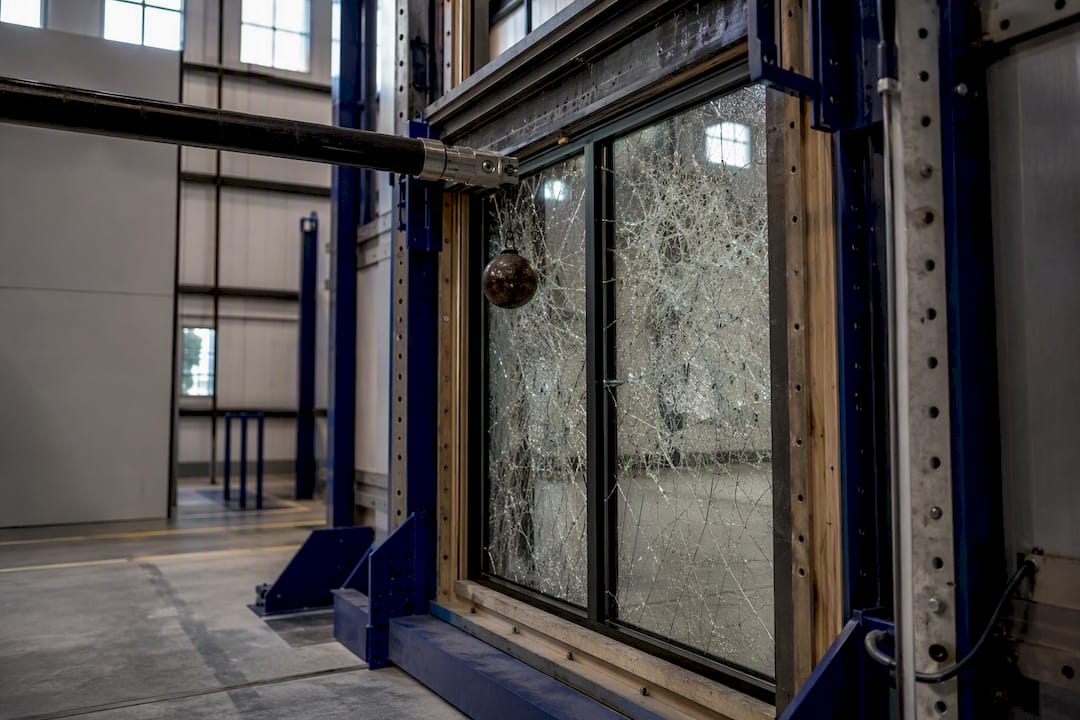
The premium is measurable. HVHZ-rated products typically cost 10% to 20% more than the same window built for a standard wind zone, according to Florida-specific pricing data from Armor Pro Windows & Doors. That premium reflects real manufacturing costs: more testing cycles, product renewal fees, and thicker glass laminates that all get passed through to the homeowner.
Permit fees add another layer. Expect a moderate range of permit and plan-review fees for a typical residential project, with HVHZ counties like Miami-Dade often charging more due to additional engineering review. Your contractor typically pulls the permit as part of the contract, though it's worth confirming that upfront. For details on jurisdiction-specific requirements, Miami-Dade County's building department publishes current permitting guidance.
Retrofit vs Full-Frame: The Cost Difference You'll Actually Pay
Two installation methods dominate the market, and the price gap between them surprises a lot of homeowners.
- Retrofit installation inserts the new impact window into your existing frame opening, leaving surrounding stucco and trim mostly untouched. This is usually the cheaper path and works well when your existing frame is structurally sound.
- Full-frame replacement removes everything down to the rough opening, which costs more in labor but is often necessary on older homes with damaged or out-of-code framing.
- Single-window jobs almost always cost more per unit than whole-home projects, sometimes close to double, because mobilization, permitting, and setup costs get spread across just one opening instead of a dozen.
Hidden costs tend to show up after the walk-through, not before. Budget extra for stucco or trim repair around the new frame, header reinforcement on older masonry construction, engineering letters required for structural sign-off, and debris disposal fees. None of these are optional add-ons a good contractor invents. They're line items that only become visible once the old windows come out.
Do Impact Windows Actually Pay for Themselves?
They can, and the math depends heavily on where you live. Insurance carriers offer wind mitigation discounts once a licensed inspector confirms your new windows meet impact standards, and in HVHZ counties those discounts often shave hundreds of dollars off your annual premium. Energy savings stack on top: impact-rated IGU and Low-E glass packages can cut cooling costs by 20% to 40% in hot, humid climates compared to older single-pane windows.
Worked example, typical 15-opening home:
That payback stretches shorter in high-premium HVHZ counties, where insurance discounts alone can run higher, and stretches longer inland where wind mitigation credits are smaller. Homeowners replacing genuinely old, inefficient single-pane windows will see faster returns than those upgrading from newer double-pane units, since the energy delta is larger.
Budgeting Before You Call a Contractor
You don't need a contractor on-site to build a realistic ballpark. A few minutes with a tape measure gets you close enough to compare quotes intelligently.
- Count your openings and note approximate sizes, separating standard windows from oversized or architectural shapes.
- Pick a per-window estimate based on the frame and glass tier you expect to choose, using the ranges above.
- Add 10% to 15% for installation complexity, plus $150 to $600 for permits, and a contingency buffer of 5% to 10% for hidden repairs.
- Adjust upward for second-floor windows or difficult-access openings, which usually add labor time and sometimes require scaffolding.
- Photograph each opening and jot down rough measurements before your estimate visit. It speeds up the quote process considerably.
Pro Tip: Take your photos in daylight and include a tape measure in frame. Contractors can often spot header issues or settling cracks from images alone, which means fewer surprises once the crew arrives.
What a Professional Estimate Should Actually Include
A written scope should specify exact window counts, sizes, glass packages, and frame material, not vague line items like "impact windows, various sizes." Permit handling, inspection scheduling, and a workmanship guarantee should all be part of the contract, not upsells added later.
Buildwithng documents existing conditions, including frame condition, stucco integrity, and header structure, before finalizing a quote. That documentation is what prevents mid-project change orders. When a contractor skips this step, hidden costs surface after demolition instead of before signing, which is exactly the situation a detailed pre-project walk-through is meant to avoid.
Why the Payback Conversation Gets Oversimplified
Most cost guides treat insurance and energy savings as a guaranteed windfall that pays for the whole project in a handful of years. That's not what the data supports. Payback in inland counties with modest wind mitigation credits often stretches past 15 years, and homeowners who already replaced their windows once in the past decade won't see the dramatic energy savings older single-pane owners will.
What gets underestimated is the cost of skipping proper documentation. Homeowners who accept a vague per-window quote without a breakdown of glass, frame, and labor routinely get hit with change orders once demolition reveals a damaged header or old, non-code framing. That's not bad luck. It's a predictable gap in the estimating process.
If you're budgeting for this project, prioritize getting a contractor who documents existing conditions before signing anything, over chasing the lowest per-window number. The cheapest quote on paper is rarely the cheapest project once the walls come open.
Get a Clear, No-Surprise Estimate From Buildwithng
If you've read this far, you already know the real risk in this project isn't the sticker price. It's the change orders that show up after demolition. Buildwithng handles custom home builds, full renovations, and window replacement projects across Southwest Florida with a documented scope from day one, so the number you sign is closer to the number you pay.

Every estimate includes a walk-through of existing conditions, upfront permit handling for HVHZ requirements in Cape Coral, Fort Myers, Naples, Bonita Springs, and Estero, and a workmanship guarantee that stays in place after final inspection. That's a meaningfully different experience than getting a per-window number over the phone with no site visit behind it.
If you're weighing impact window costs against a broader renovation, or you're not sure whether retrofit or full-frame replacement fits your home, request a free estimate from Buildwithng and get a written scope before you commit to anything.
Frequently Asked Questions
How much do hurricane impact windows cost per window in 2026? Most homeowners pay $800 to $2,100 per window installed, depending on frame material, glass package, and whether the home sits in a High-Velocity Hurricane Zone.
Is it cheaper to replace all windows at once or one at a time? Whole-home replacement almost always costs less per window, since mobilization and permit costs get spread across multiple openings instead of concentrated on a single unit.
Do impact windows really lower insurance premiums? Yes, once a wind mitigation inspection confirms compliance, though the discount amount varies by carrier, county, and your home's other mitigation features like roof age and garage door rating.
Are hurricane impact windows worth it if I'm inland and not in an HVHZ? The energy savings and storm protection still apply, but the payback period is typically longer since inland insurance discounts and code premiums are smaller than in coastal HVHZ counties.
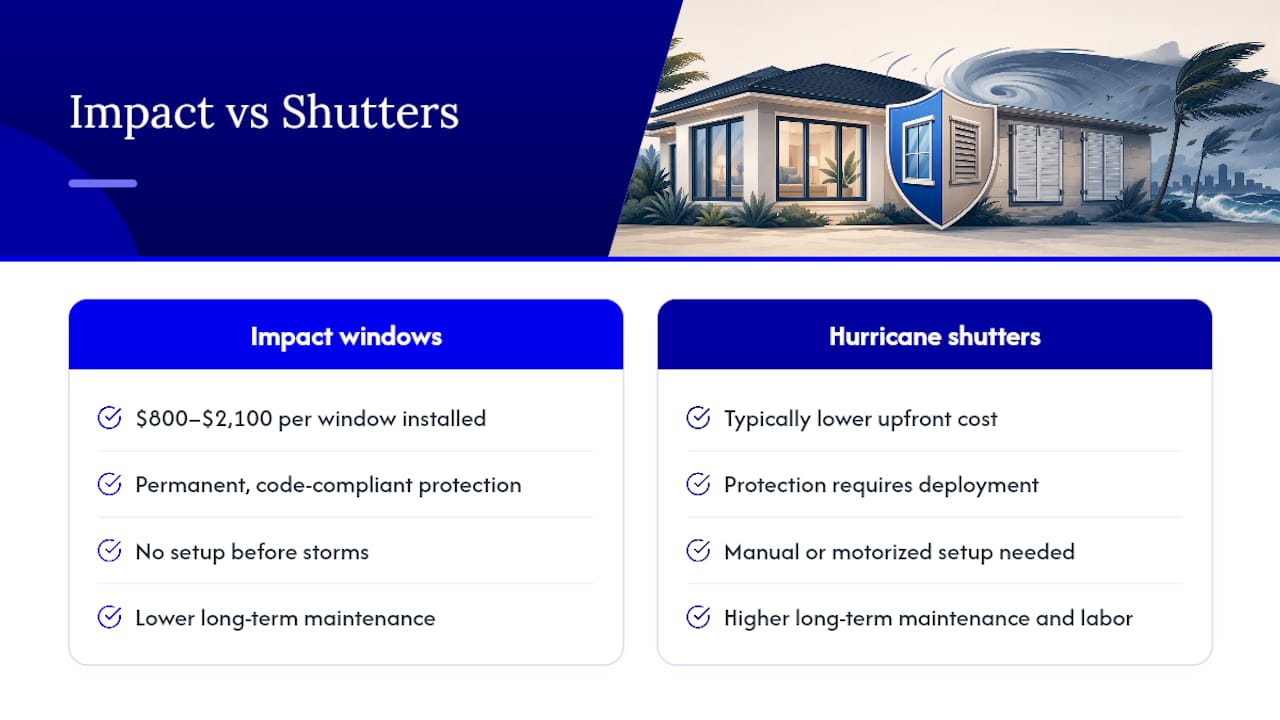
What's the difference between impact windows and standard windows with hurricane shutters? Impact windows provide permanent, code-compliant protection without deployment, while shutters require manual or motorized setup before every storm and typically cost less upfront but more in long-term maintenance and labor.
Sources
- How much do hurricane windows cost? — BobVila
- How Much Do Impact Windows Cost in Florida? (2026 Guide) — Armor Pro Windows & Doors
- ENERGY STAR — Review of cost-effectiveness analysis (windows)
- ASTM E1886 standard (impact tests) — ASTM Store