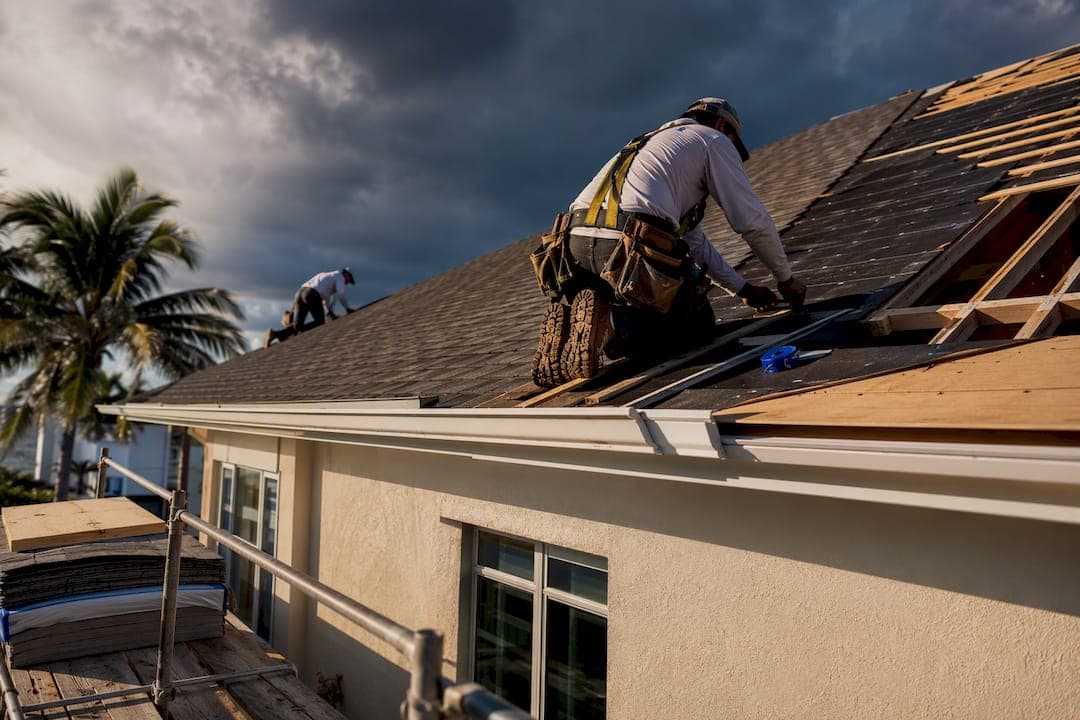
The Florida Building Code requires wind-resistant design, approved opening protection, and High-Velocity Hurricane Zone testing and materials for construction in the state's most exposed counties. Every requirement traces back to the current FBC edition and its reference to ASCE 7-22, plus Florida Statute 553.844 for retrofit triggers. Confirm your address's design wind speed with the ASCE 7 Hazard Tool and check product approval numbers before you sign a contract. Homes built before 2002 often carry the largest compliance gap.
TL;DR:
- Wind speeds vary significantly across Florida and must be confirmed with the ASCE 7 Hazard Tool to ensure proper structural design and insurance credits.
- High-Velocity Hurricane Zone areas like Miami-Dade and Broward impose stricter impact and product approval requirements, often requiring dedicated inspection and documentation.
- Homes built before 2002 likely lack full compliance, making retrofits such as roof-to-wall connectors and impact-rated openings critical to improve storm resilience and insurance benefits.
- Construction permits rely on accurate product approvals and stamped engineering, with local enforcement differences potentially affecting project timelines.
- Foundation design and flood zone classification, especially in coastal areas, are vital for storm surge protection and should be confirmed before starting construction or retrofit work.
Table of Contents
- Florida Building Code Hurricane Requirements at a Glance
- How to Find Your Property's Design Wind Speed
- High-Velocity Hurricane Zone Rules: What Makes Them Different
- A Brief History of Florida's Hurricane Building Standards
- Retrofit Rules for Existing Homes: The 50% Rule and Beyond
- Checking Compliance: Permits, Product Approvals, and Inspections
- Why Contractor Credentials Matter for Hurricane Compliance
- The Real Cost of Skipping Foundation and Flood Zone Planning
- Who Enforces Florida's Hurricane Building Codes
- Building to Code Is the Floor, Not the Ceiling
- Building or Retrofitting? Here's How Buildwithng Handles the Code Details
- Sources
- FAQ
Florida Building Code Hurricane Requirements at a Glance
The core of Florida's hurricane construction standards comes down to four obligations: design for the correct wind speed, protect every opening, secure the roof assembly to the walls and foundation, and in certain counties meet stricter High-Velocity Hurricane Zone (HVHZ) testing. These requirements apply whether you're building new or replacing 25% or more of an existing structure's roof system.
Design wind loads depend on a building's risk category and site-specific wind speed, both defined under ASCE 7-22 as adopted into the FBC 8th Edition. A one-story home in Cape Coral and a mid-rise condo in Naples don't face identical pressures, and the code accounts for that with tables tied to exposure category and building height.
Opening protection, meaning impact-rated windows, doors, and garage doors or approved shutter systems, isn't optional in wind-borne debris regions. Florida law backs this with a marketing restriction: no product can be sold as hurricane or windstorm protection unless it carries state approval.
Roof assemblies face their own testing standards. Builders and inspectors look for:
- Miami-Dade NOA (Notice of Acceptance) approvals on roofing and cladding products, even outside Miami-Dade County
- UL 2375 ratings for roof covering systems tested against wind uplift
- ANSI/MCA FTS-1 compliance for metal roofing fastening
- Hip roofs generally outperform gable roofs in wind tunnels, which is why many coastal designs favor them
- Roof-to-wall connections (hurricane straps and clips) rated for the uplift forces calculated under the site's design wind speed
How to Find Your Property's Design Wind Speed
Wind zones in Florida aren't uniform. The peninsula's exposure to open water differs sharply from the panhandle's, and the FBC's wind speed maps reflect that variation county by county. When the state adopted ASCE 7-22 in the 8th Edition, those maps shifted, and some panhandle areas saw design wind speeds change enough to affect structural sizing on new permits.
Getting your site-specific number takes three steps:
- Open the ASCE 7 Hazard Tool and enter your property address. It returns the design wind speed, seismic data, and other hazard parameters tied to your exact coordinates rather than a rough county average.
- Cross-check against your county's wind speed reference, available through the Florida Building Commission or via GIS resources maintained by university mapping programs like FGDL.
- Confirm the figure with your contractor or engineer before finalizing structural drawings, since the number drives component and cladding load calculations, window and door pressure ratings, and often insurance mitigation credits.
That last point matters more than most homeowners realize. A design wind speed that's off by even 10 mph can change which window products qualify for your project, and it can shift your windstorm insurance premium noticeably in either direction.
High-Velocity Hurricane Zone Rules: What Makes Them Different
The High-Velocity Hurricane Zone covers Miami-Dade, Broward, and the Florida Keys, and construction there follows a stricter rulebook layered on top of the standard FBC. If you're building or renovating in one of these jurisdictions, expect more paperwork and less flexibility on product substitutions.
- HVHZ chapters (roughly 1512 through 1524 in the Building volume) set out impact testing for wind-borne debris, material performance standards, and rooftop assembly requirements that extend beyond the statewide baseline.
- Every product used, from window systems to roof underlayment, needs a valid Notice of Acceptance or state product approval specific to HVHZ use. A product approved for use in Orlando doesn't automatically qualify for a Homestead reroof.
- Reroofing projects in HVHZ jurisdictions typically require owner notification forms documenting the scope of work and confirming compliant materials before a permit closes out.
- Inspectors in these counties routinely request the NOA number printed directly on product labels, so contractors need to keep that documentation organized and available on-site.
If your project sits inside HVHZ boundaries, budget extra time for approval verification. It's the single biggest source of permit delays we see on coastal remodels.
A Brief History of Florida's Hurricane Building Standards
Florida's hurricane codes weren't always this rigorous. Before 1992, building requirements varied by county with little statewide consistency, and Hurricane Andrew exposed how costly that patchwork approach could be.
- A 1996 state commission recommended sweeping reform, leading to the first unified statewide Florida Building Code in 2002.
- FEMA's later analysis of Hurricane Michael found that structures built to post-2002 standards held up dramatically better than older buildings nearby, with features like deeper pilings and hip roofs making a measurable difference.
- The 8th Edition (2023) folded in ASCE 7-22, updating wind maps and adding provisions for elevated buildings and, in some risk categories, tornado loads.
- The upcoming 9th Edition continues refining roof-zone rules, aiming to simplify field application and reduce the installation errors that cause roof-system failures.
Each update reshapes permit scope and, in some cases, triggers retrofit obligations on existing buildings. Homeowners planning a major renovation should assume the rules have changed since their house was last permitted.
Retrofit Rules for Existing Homes: The 50% Rule and Beyond
Florida Statute 553.844 doesn't require every homeowner to retrofit their entire house to current standards. It sets specific triggers instead, and understanding them saves real money.
- Full roof replacements generally must incorporate current opening protection and roof deck attachment requirements, but repairing or replacing less than 25% of the roofing system can qualify for an exception if the prior work already complied with the code in effect at that time.
- The often-cited "50% rule" refers to substantial improvement thresholds tied to permit valuation. Once renovation costs reach that threshold relative to the structure's value, broader code compliance, including flood and structural provisions, typically applies.
- Prescriptive retrofit options exist specifically so owners aren't forced into full replacement. Common measures include installing approved roof-to-wall connectors with uplift ratings around 500 pounds, adding a secondary water barrier, and strengthening roof deck attachment.
- Gable-end bracing and connector upgrades at exposed corners are usually prioritized first since they address the most common failure points in older homes.
Pro Tip: If your roof was last replaced before 2002, don't wait for storm damage to force the issue. A proactive retrofit using prescriptive connector upgrades often costs a fraction of what a post-storm emergency reroof runs, and it may qualify you for wind mitigation insurance credits right away.
Checking Compliance: Permits, Product Approvals, and Inspections
Before any contractor breaks ground or replaces a roof, a few verification steps protect you from costly rework later.
- Verify the product approval number. Every hurricane-rated window, door, shutter, or roofing product should carry a state approval or Miami-Dade NOA number printed on its label or spec sheet. If a salesperson can't produce that number, treat the product as non-compliant regardless of what the packaging claims.
- Confirm your permit package includes stamped engineering. Most hurricane-related permits in wind-borne debris regions require signed and sealed structural drawings, not just a contractor's sketch.
- Expect special inspections. Roof-to-wall connections and opening installations often require a documented inspection before the roof is closed in, and your contractor should provide photo documentation alongside standard permit paperwork. Software platforms used in roofing bid and project workflows can help contractors track this documentation systematically.
Pro Tip: Keep every product approval sheet and inspection report in one folder for the life of your ownership. Insurance adjusters and future buyers both ask for this paperwork, and reconstructing it years later is far harder than filing it now.
Why Contractor Credentials Matter for Hurricane Compliance
Buildwithng offers construction, renovation, and property upgrade services in Southwest Florida, utilizing a design-build model that aims to manage FBC compliance throughout the project phases. That structure matters because hurricane compliance touches structural engineering, roofing, and window installation all at once, and a fragmented team can lose track of who's responsible for which product approval.
Before hiring any contractor for hurricane-related work, ask for their state license number and request copies of product approval documentation for anything they plan to install.
The Real Cost of Skipping Foundation and Flood Zone Planning
Hurricane resilience doesn't stop at the roofline. Foundation design and flood zone classification often determine whether a home survives storm surge, and Florida's code ties both to FEMA flood maps rather than treating them as a separate conversation from wind resistance.
Properties in designated flood zones, particularly Zone AE and VE along coastal Southwest Florida, face elevation requirements tied to the Base Flood Elevation for that parcel. New construction in a VE zone typically requires pilings or an elevated foundation designed to let storm surge and wave action pass beneath the structure rather than against it. FEMA's review of Hurricane Michael highlighted this directly: the Sand Palace home that famously survived the storm nearly intact used deeper pilings than code minimums required, a design choice that outperformed baseline expectations by a wide margin.

Slab-on-grade construction remains permitted outside high-risk flood zones, but even there, the foundation must anchor to the structure above in a way that resists the same uplift and lateral forces the wind load calculations account for. This is where foundation design and wind design intersect: a foundation rated for flood loads but poorly connected to the framing above still leaves a home vulnerable to a roof or wall failure.
Flood zone determination isn't optional guesswork. Your local building department or a licensed surveyor can pull your parcel's FEMA flood zone designation, and that classification affects insurance requirements as much as construction requirements. Skipping this step before design work begins is one of the most expensive mistakes a property owner can make, since retrofitting a foundation after the fact is rarely practical and often means starting over.
Who Enforces Florida's Hurricane Building Codes
Florida sets the baseline through the statewide Florida Building Code, but enforcement happens locally. Each county and municipality operates its own building department, responsible for reviewing plans, issuing permits, and conducting inspections against the current FBC edition adopted by the state.
This local layer creates real variation in practice, even though the underlying code is uniform. A permit reviewer in Lee County and one in Miami-Dade County are both enforcing FBC requirements, but Miami-Dade's HVHZ status means its reviewers scrutinize product approvals and testing documentation more closely than a jurisdiction outside that zone. Local building officials also have discretion in how they interpret ambiguous code language, which is part of why working with a contractor who has an established relationship with local permitting offices speeds up approval timelines.
The Florida Building Commission sits above this local enforcement layer, responsible for adopting new code editions statewide and maintaining the product approval system that local departments rely on. When the Commission updates wind provisions or adds new chapters, as it did folding ASCE 7-22 into the 8th Edition, every county's building department is obligated to enforce those changes on new permits.
Homeowners sometimes assume a permit pulled through the county guarantees full code compliance. It largely does, provided the plans were reviewed correctly, but the responsibility for supplying accurate product approval numbers and engineering documentation still sits with the contractor and design team submitting the application.
Building to Code Is the Floor, Not the Ceiling

Meeting the Florida Building Code's minimum hurricane provisions keeps a project legal. It doesn't always keep it optimal. FEMA's own review of Hurricane Michael found that homes with modest upgrades beyond code minimums, deeper pilings, insulated concrete forms, hip roofs with minimal overhangs, sustained a fraction of the damage nearby code-compliant structures did.
That gap between "meets code" and "built to last" is where most of the practical decision-making happens. Prioritize opening protection and roof-to-wall connections first if you're sequencing a retrofit on a budget; those two categories drive the largest share of storm damage claims. A modest structural upgrade at the design stage almost always costs less than an emergency repair after the fact, and it often qualifies homeowners for meaningful wind mitigation insurance credits. Get every scope of work and product approval number documented in writing before construction starts. It's the difference between a smooth insurance claim and a dispute over what was actually installed.
— Alston
Building or Retrofitting? Here's How Buildwithng Handles the Code Details
Buildwithng gives Southwest Florida homeowners one accountable team managing every phase of a hurricane-compliant build, from structural design through final inspection, instead of juggling separate architects, roofers, and window installers who each blame the others when a product approval doesn't match the permit.

Whether you need new construction with wind loads calculated to your exact site, a full reroof with proper opening protection, or a structural retrofit to secure roof-to-wall connections on an older home, Buildwithng manages the plan preparation, product approval documentation, and permit process from start to finish. Clients receive stamped engineering plans, product approval references for every hurricane-rated component installed, and installation checklists that hold up under insurance review or a future sale. That transparency, backed by a workmanship guarantee, is what separates a coordinated design-build process from piecing together separate trades on your own.
If your Cape Coral, Fort Myers, Naples, Bonita Springs, or Estero property needs a hurricane-ready build or retrofit, request a free, no-obligation estimate and start the conversation with a team that treats code compliance as the baseline, not an afterthought.
Sources
- Fema
- Chapter 553 Section 844 - 2024 Florida Statutes - The Florida Senate
- Florida Building Code, Building, 9th Edition (2026) | ICC
FAQ
What Are Florida's Hurricane Building Code Requirements?
The Florida Building Code requires wind-resistant structural design based on site-specific wind speeds, impact-rated or shuttered opening protection, and tested roof assemblies with rated roof-to-wall connections. Buildings in High-Velocity Hurricane Zones like Miami-Dade and Broward face additional testing and product approval requirements beyond the statewide baseline.
What Does the FBC Require for Hurricane Straps?
Hurricane straps, also called roof-to-wall connectors, must be rated to resist the uplift forces calculated for the building's specific design wind speed under ASCE 7-22. Retrofit guidance from the Florida Building Commission commonly references connectors rated around 500 pounds of uplift capacity for prescriptive upgrades on existing homes.
What Is the 50% Rule in the Florida Building Code?
The 50% rule refers to substantial improvement thresholds. When renovation costs reach roughly half of a structure's value, broader code compliance typically applies, including flood elevation and structural provisions beyond the specific repair being made. Separately, roofing repairs under 25% of the system may qualify for exceptions if prior work already met the code in effect at the time.
When Did Hurricane Building Codes Change in Florida?
Florida adopted its first unified statewide building code in 2002 following recommendations from a 1996 commission formed after Hurricane Andrew. The most recent major update, the 8th Edition in 2023, incorporated ASCE 7-22 wind provisions and revised wind speed maps statewide.
How Do I Find the Design Wind Speed for My Property?
Enter your address into the ASCE 7 Hazard Tool to get a site-specific design wind speed based on ASCE 7-22 parameters. You can cross-check that figure against county wind speed references maintained by the Florida Building Commission or university GIS resources before finalizing structural plans.
Can Buildwithng Help With Hurricane Code Compliance?
Yes. Buildwithng manages new construction, reroofing, and structural retrofit projects across Southwest Florida with in-house handling of plan preparation, product approval documentation, and permit coordination. Pricing is provided through a free estimate available on the company's site.