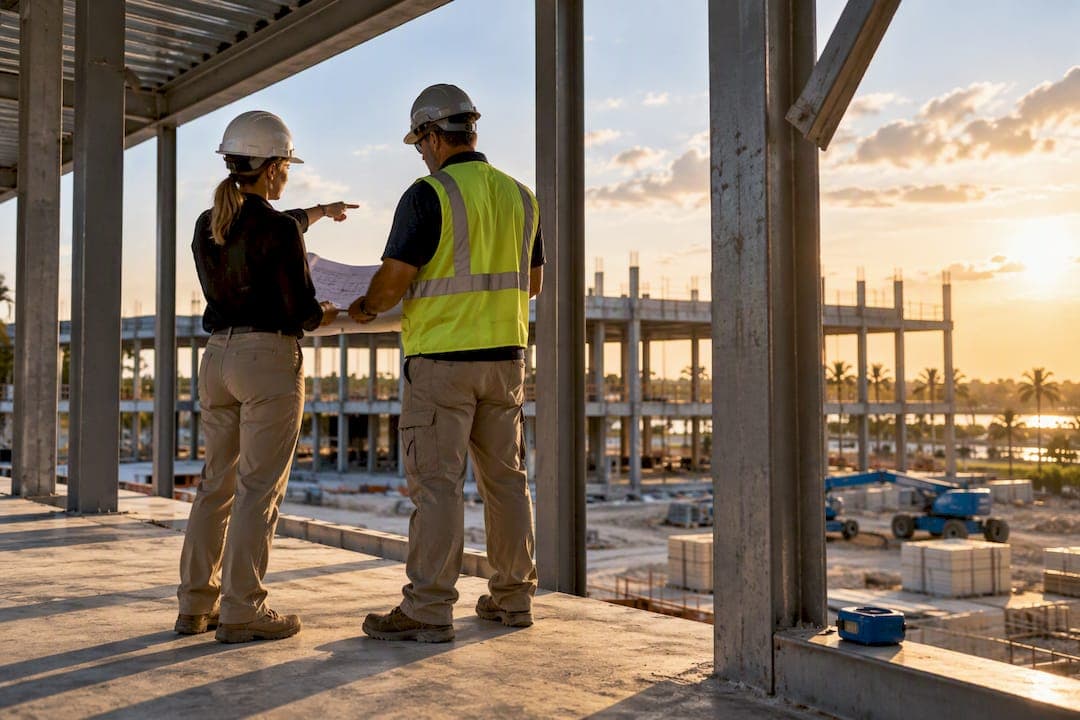
Design-build typically delivers faster and shifts design risk to the design-builder, while design-bid-build gives owners more control over final design details through separate, competitively bid contracts. For owners weighing design build vs bid build, the choice comes down to priorities: pick design-build when time and single-point accountability matter most, and pick design-bid-build when locking in exact design specifications and maximizing price competition matter more than speed.
TL;DR:
- Design-build projects typically finish about 36% faster than design-bid-build and have 3.8% less cost growth, mainly due to overlapping design and construction phases.
- Owner decision-making speed is critical; slow approvals or vague scope descriptions can erode the schedule advantages of design-build.
- Fixed, fully developed scope favors design-bid-build's competitive bidding, whereas tight deadlines and flexible scope favor design-build's speed.
- Design-build shifts design risk entirely to the responsible contractor, while design-bid-build makes owners liable for errors in contract documents.
- Clear, non-negotiable scope and milestones reduce change orders and cost overruns, regardless of the chosen delivery method.
Table of Contents
- Design-build explained: contract form, procurement, and what owners must prepare
- Design-bid-build explained: the traditional sequence and owner responsibilities
- Head-to-head: cost, schedule, quality, and risk
- How to decide: an owner checklist and decision flow
- Contracts and risk allocation: design errors, change orders, and warranties
- Publisher perspective: a single accountable team on design-build projects
- What the research gets right, and what owners still have to weigh themselves
- How to start a design-build project with NG Construction SWFL
- Sources
- FAQ
Design-build explained: contract form, procurement, and what owners must prepare
Design-build puts design and construction under one contract with a single entity responsible for both. According to FHWA's overview of design-build practice, this structure enables early collaboration between designers and builders and lets construction start before design is fully complete, provided the request for proposal defines scope clearly.
Owners typically choose one of a few procurement approaches, each trading price certainty for design flexibility differently:
- Best-value selection weighs qualifications and technical approach alongside price.
- Qualifications-based selection picks the design-builder first, then negotiates price and scope.
- Low-bid design-build awards to the lowest responsive price, which narrows quality differentiation.
Payment structures vary too, including lump sum, guaranteed maximum price (GMP), and progressive GMP, where the price firms up as design develops.
Pro Tip: Write your RFP's non-negotiables (site restrictions, finish standards, code requirements) as a short, itemized list so the design-builder can't quietly trade them away for schedule or cost relief.
Design-bid-build explained: the traditional sequence and owner responsibilities

Design-bid-build separates the process into three sequential phases: design, competitive bidding, and construction. The owner hires an architect or engineer to complete full construction documents, then invites contractors to bid on that fixed scope, typically awarding to the lowest responsive bidder as described in research on procurement and risk allocation.
This sequence puts real weight on the owner's design team. Because bidders price exactly what the drawings show, gaps or errors in those documents become the owner's problem once construction starts.
- The owner holds two separate contracts, one with the designer and one with the contractor.
- The owner bears the risk for completeness and accuracy of the design documents.
- Change orders tend to rise when drawings are incomplete or ambiguous at bid time.
The trade-off is real design control and open competitive pricing, balanced against a longer overall timeline and more exposure to costly change orders.
Head-to-head: cost, schedule, quality, and risk
The clearest empirical comparison comes from a 2018 analysis of 212 contemporary projects, which found design-build delivery produced 3.8% less cost growth and 1.7% less schedule growth than design-bid-build, with construction phases running 36% faster and total design-through-completion timelines 102% faster.

Design-build's speed advantage comes from overlapping design and construction, not from cutting corners. When the design-builder can start site work or ordering long-lead materials while later design packages are still being finalized, months come off the schedule that design-bid-build spends waiting for 100% complete drawings before bidding even opens.
Translated into practical terms for an owner: a design-bid-build project that would otherwise stretch past a budget cycle or a seasonal construction window often benefits from the compressed timeline design-build offers, while a project with a fixed, unchangeable design and a hard requirement for open competitive bidding may still be better served by the traditional sequence.
- Design-build favors speed, single-point accountability, and lower average cost growth, but reduces the owner's leverage over granular design decisions once the contract is signed.
- Design-bid-build favors design control and transparent price competition, but stretches timelines and shifts more financial exposure to the owner if documents are incomplete.
Statistic Callout: substantially faster construction. Design-build projects in the 2018 CII/Pankow cost performance study finished construction significantly faster than comparable design-bid-build projects, a difference that often determines whether a project meets a hard deadline like a school year or a selling season.
How to decide: an owner checklist and decision flow
Before choosing a delivery method, walk through these questions in order:
- How firm is your deadline? If a fixed date matters more than locking every design detail, design-build's compressed timeline usually wins.
- How defined is your scope already? Complete, unchangeable drawings favor design-bid-build's competitive bidding.
- Can your team respond fast? Design-build often requires owner decisions within a matter of days on package approvals; slow decision cycles erode the schedule advantage.
- Is price competition or design certainty the priority? Open bidding favors design-bid-build; single-source accountability favors design-build.
For a design-build RFP, spell out non-negotiable design criteria, milestone acceptance tests, and required owner response windows. For design-bid-build, lock design documents before bidding opens and require contractors to flag ambiguities during the bid period, not after award.
Pro Tip: Treat a vague scope description, missing milestone dates, or an unrealistic owner-response window in any proposal as a red flag; these are the details that turn into change orders later.
Contracts and risk allocation: design errors, change orders, and warranties
Who bears the cost of a design mistake depends entirely on the delivery method. In design-bid-build, the owner's separate design contract means the owner typically absorbs the cost of correcting design errors discovered during construction. In design-build, that risk sits with the single design-build entity, which is why FHWA's guidance on work zone principles stresses delegating risk to the party best positioned to manage it.
GMPs, allowances, and contingencies function as the financial guardrails in design-build contracts, setting a price ceiling while leaving room for owner-selected finishes within defined allowances.
- Require milestone approvals tied to specific design deliverables, not vague progress updates.
- Confirm acceptance criteria and closeout obligations in writing before signing.
- Check warranty language covers both design defects and construction workmanship, not just materials.
Publisher perspective: a single accountable team on design-build projects
A design-build company can specialize in custom home building, renovations, and commercial projects, offering accountability from initial design through final inspection, free estimates, and management of every phase under one roof, sometimes backed by a workmanship guarantee.
One team, one contract, one point of accountability from the first blueprint to the final walkthrough.
That single-team structure is the practical expression of what the research describes: fewer handoffs, faster decisions, and one party accountable for both design intent and construction quality. Some design-build firms combine certified expertise with a focus on sustainable design choices throughout the build, such as integrating commercial solar solutions from Indigo Energy.
What the research gets right, and what owners still have to weigh themselves
The benchmarks are real: design-build tends to finish faster and with less cost growth, and the mechanism behind that (overlapping design and construction under one accountable party) makes intuitive sense. Where the conventional advice falls short is treating design-build as the automatic winner for every project. It is not. A project with a genuinely fixed scope and a hard requirement for open competitive pricing can still be served better by design-bid-build's traditional sequence.
What gets underweighted in most comparisons is owner readiness. Design-build's speed advantage depends on the owner making fast, informed decisions on design packages as they come in. An owner who cannot commit to short review windows will lose much of the schedule benefit the data promises, no matter which method they choose. Before picking a delivery method, an owner should honestly assess their own decision bandwidth, not just the project's technical requirements.
— Alston
How to start a design-build project with NG Construction SWFL
A design-build firm may deliver custom home building, renovations, kitchen and bath remodeling, room additions, and commercial build-outs under one accountable design-build team, providing a single point of contact managing every phase, from blueprints to final inspection, sometimes backed by a workmanship guarantee. If a compressed timeline and single-team accountability fit your project, request a free estimate to start the conversation.
Sources
- REVISITING PROJECT DELIVERY PERFORMANCE 1998–2018
- Design-Build practice overview — FHWA
- Applying the Principles of the Work Zone Rule to Design-Build Projects — FHWA
FAQ
What are the disadvantages of design-bid-build?
Design-bid-build takes longer overall because design must be fully complete before bidding opens, and the owner bears the risk for any errors or gaps in those design documents. This often leads to more change orders and schedule growth than design-build once construction begins.
Is design-build more expensive?
Design-build is not inherently more expensive; a 2018 study found design-build projects had 3.8% less cost growth than design-bid-build. Outcomes still depend heavily on project selection and how clearly the RFP defines scope and non-negotiables.
Are design-build firms worth it?
For owners who need speed and single-point accountability, design-build firms often deliver measurable schedule and cost advantages, particularly on projects with well-defined RFP scope. They are less well suited to projects requiring locked-in design details and maximum competitive price discovery.
What is design-bid-build?
Design-bid-build is a construction delivery method where the owner hires a designer to complete full construction documents, then invites contractors to bid competitively on that fixed scope. The owner holds separate contracts for design and construction, and typically awards to the lowest responsive bidder.