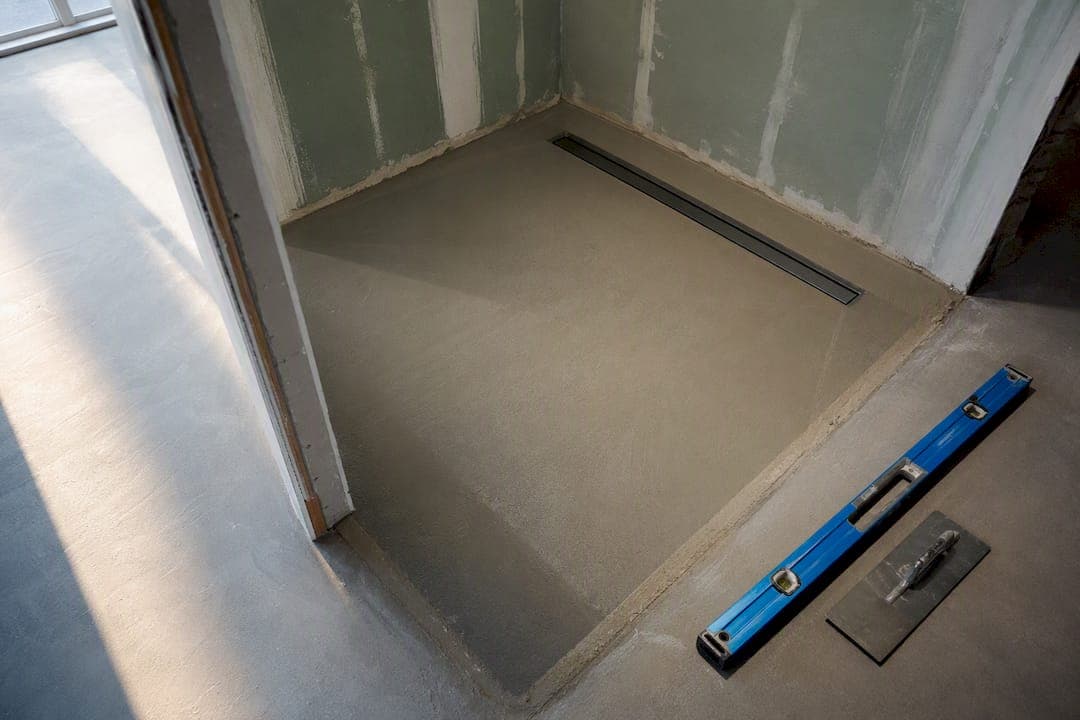
A curbless shower is a smart choice when accessibility, resale appeal, and a clean modern look matter more than upfront cost. It's a tougher call when your bathroom is small, your budget is tight, or your subfloor can't easily be reworked. Choose curbless if you're planning to age in place or want a spa-like layout that works for every family member; keep the curb if space or money are already stretched thin.
TL;DR:
- Proper slope, drain placement, and waterproofing are critical for curbless showers to prevent water from puddling or leaking, requiring careful planning and testing.
- Using a linear drain and placing it opposite the shower opening enhances drainage efficiency and simplifies tile layout, reducing the risk of water escape.
- The main extra costs involve subfloor modifications, high-quality waterproofing, and custom glass panels, with experience level of the contractor influencing overall expense.
- A correctly installed curbless shower offers benefits like easier cleaning, a larger visual space, and improved accessibility for all ages and mobility levels.
- Poor implementation or skipped flood testing can lead to long-term water damage, which negatively impacts resale value and incurs costly repairs.
Table of Contents
- Curbless Shower Pros and Cons: The Accessibility Case
- The Disadvantages of Curbless Showers You Should Plan For
- What Determines Whether the Drainage Actually Works
- What a Curbless Shower Really Costs
- Is a Curbless Shower Worth It for Your Bathroom?
- Your Contractor Checklist Before Signing Anything
- How a Curbless Shower Affects Resale Value
- Why Waterproofing Should Never Be an Afterthought
- Let Buildwithng Handle Your Curbless Shower Remodel
- Sources
- FAQ
Curbless Shower Pros and Cons: The Accessibility Case
The strongest argument for a curbless shower has nothing to do with style. It's about who can actually use the bathroom without help, now or in ten years. A zero-threshold entry lets a wheelchair, walker, or shower chair roll straight in, which is the reason universal design specialists and aging-in-place planners keep steering homeowners toward this layout. You're not just building for today's household. You're building for whoever lives there next, or for the version of yourself who might need a little more support down the road.
The pros and cons of curbless showers go beyond mobility, though. Removing the curb also removes the tracks, hardware, and tight grout lines where mold and soap scum tend to collect, which cuts down real cleaning time. And large-format tile paired with open sightlines makes even a modest bathroom read as bigger and more expensive than it is.
- Zero-threshold entry supports wheelchair access, walkers, and long-term aging-in-place plans
- Fewer door tracks and framed edges mean less grout, less mold, and faster cleaning
- Open sightlines and large-format tile create a spa-like, larger-feeling bathroom
- One design serves toddlers, seniors, and everyone in between without retrofitting later
The Disadvantages of Curbless Showers You Should Plan For
Water doesn't know it's supposed to stay inside the shower. Without a curb to physically block it, containment depends entirely on slope, drain placement, and glass configuration doing their jobs correctly. Get any of those wrong and you'll find puddles creeping toward the vanity every morning. That's the core tension behind curbless shower disadvantages: the design that looks effortless is actually less forgiving of mistakes than a traditional curbed stall.
Privacy and warmth take a hit too. Open, curbless layouts often skip a full enclosure, which means less visual privacy in a shared bathroom and a cooler shower experience since there's less glass or wall trapping steam and heat. Small bathrooms compound the problem, since there's often no room for the generous sloped floor a curbless design needs without creative framing.
- Splash and puddling risk when slope, drain placement, or glass coverage falls short
- Reduced privacy and a cooler shower feel in smaller, open-concept bathrooms
- Tight square footage often can't accommodate proper water containment without redesign
- Higher upfront costs from structural changes, subfloor elevation, and specialized drains
What Determines Whether the Drainage Actually Works
Getting water containment right comes down to a handful of decisions your contractor makes before a single tile goes down. This is where curbless shower pros and cons stop being theoretical and start being about specific plumbing and slope choices.
Linear versus center drains. A linear drain along one wall lets the entire floor slope in a single direction, which simplifies the tile layout and allows larger format tile than a center drain's four-way slope. Linear drains also make it easier to use large-format tile precisely because the slope only runs one way instead of pitching toward a central point from every side.
Drain placement relative to the opening. Positioning the drain opposite the entry, rather than near it, shortens the runway water has to travel before it reaches open floor. This single decision does more to prevent stray water than almost any other design choice.
Waterproofing depth. A layered membrane system that extends well beyond the wet area, not just the shower footprint, is non-negotiable. Manufacturer guidance from Schluter recommends system-based waterproofing precisely because curbless transitions have no curb to serve as a backup barrier.
The flood test. A 24-hour flood test performed after the membrane goes in but before tile is laid is the only reliable way to confirm the waterproofing actually holds water. Skip this step and you won't find out about a failure until there's damage behind the wall.
- Choose a linear drain and confirm slope runs in one clean direction
- Place the drain opposite the shower opening, not beside it
- Require full membrane coverage extending past the wet zone
- Insist on a 24-hour flood test before any tile installation begins
Pro Tip: Ask your contractor to photograph the flood test in progress. A standing puddle of water on plastic sheeting for a full day is unglamorous, but it's the cheapest insurance you'll ever buy against a five-figure leak repair.
What a Curbless Shower Really Costs
A curbless install runs more than a standard curbed shower, and the gap comes down to labor and materials most homeowners never see in a curbed bathroom — learn more from this Full Home Renovation Cost Toronto guide to understand budget drivers for projects like this. Subfloor work to create the proper slope, a linear drain assembly, and layered waterproofing all add hours and material cost before anyone even thinks about tile.
The main cost drivers are predictable once you know to look for them:
- Subfloor modification to build in the correct slope and, sometimes, to lower the floor for a level transition
- Linear drain hardware, which typically costs more than a standard center drain
- Custom or oversized glass panels sized to control splash without a full enclosure
- Premium large-format tile, which requires more precise cutting and setting time
- A contractor's experience level, since curbless work punishes shortcuts more than standard tile jobs
You can control the number without abandoning the concept. A low-profile prefabricated shower tray sidesteps some subfloor labor. Limiting glass to a single splash panel instead of a full surround trims material cost. Mid-range tile in a large format still delivers the open, modern look at a lower price point than premium stone. Staging the project, tackling the shower now and holding off on a full vanity overhaul, is another way to control curbless shower cost without cutting corners on waterproofing.
Is a Curbless Shower Worth It for Your Bathroom?
Curbless makes sense when you have the square footage to work with, you're planning to age in place, or you simply want a bathroom that reads as upscale and current. It's also a strong fit for multi-generational households where one layout needs to serve very different mobility needs under the same roof.
It's a harder sell in a small bathroom where there isn't room for a properly sloped floor, or in a household that specifically needs a tub for small children. If plumbing or subfloor work would blow past your budget just to make the slope work, that's a legitimate reason to stick with a curbed design instead.
Watch for these red flags before committing:
- No clear plan for correct slope and drain placement from your contractor
- No discussion of ventilation or heat retention in an open, curbless layout
- A budget that can't absorb subfloor or plumbing changes if they turn out to be necessary
Your Contractor Checklist Before Signing Anything
Most curbless shower failures trace back to a contract that never specified the details that actually matter. Before you sign, get these items in writing.
- A written waterproofing plan naming the specific membrane product and coverage area
- A commitment to a 24-hour flood test after waterproofing, before any tile goes down
- Exact drain type and location, ideally opposite the shower opening, plus the slope gradient
- Photos of at least two or three past curbless installations from that contractor
- Written warranty terms for both materials and labor
- A plan for ventilation and heat, since open layouts lose warmth faster than enclosed stalls
- Confirmation of how adjacent floor heights and fixture relocations will be handled
Pro Tip: If a contractor hesitates when you ask for the flood test in writing, treat that as a warning sign. It's a standard, low-cost step, and reluctance to commit to it on paper is a reason to keep interviewing contractors.
How a Curbless Shower Affects Resale Value
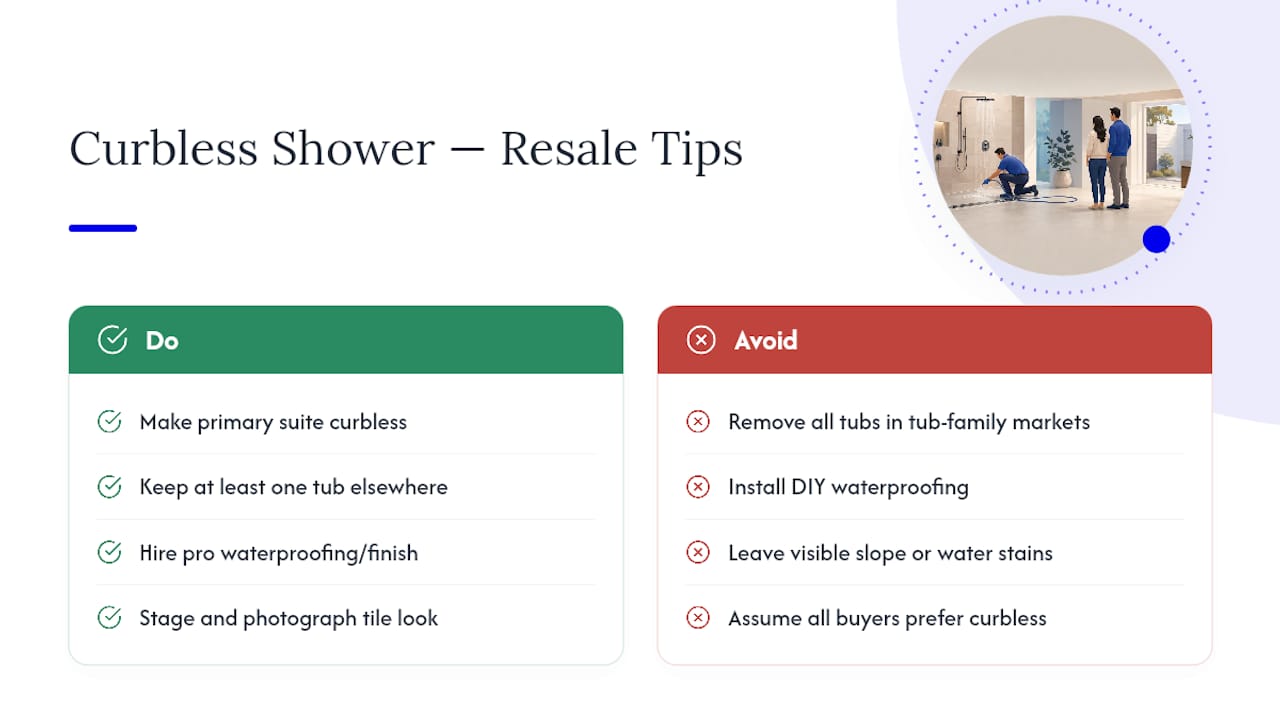
Bathrooms sell houses, and a well-executed curbless shower tends to read as a premium upgrade to buyers browsing listings, not a niche accessibility feature. The open, large-tile look photographs well, which matters more than most homeowners realize in a market where buyers scroll through listing photos before ever scheduling a showing. Buyers increasingly associate the design with newer construction and higher-end renovation work, which can help a home stand out against comparable listings with a dated tub-shower combo.
The resale math gets more nuanced depending on your market and your buyer pool. In neighborhoods with a strong population of older buyers or multi-generational households, a curbless primary bathroom can be a genuine selling point that shortens time on market. In areas dominated by young families prioritizing tub space for small children, a curbless-only bathroom without a tub elsewhere in the home could actually narrow your buyer pool rather than widen it.
The safest resale strategy is keeping at least one tub somewhere in the home, ideally in a secondary bathroom, while making your primary suite curbless. That combination captures the accessibility and design upside without alienating buyers who need bathing options for kids or pets. A poorly executed curbless shower, one with visible slope problems, water stains, or DIY-grade waterproofing, will hurt resale value far more than a curbed shower ever would, since inspectors and buyers alike treat visible moisture issues as a red flag worth negotiating over.
Why Waterproofing Should Never Be an Afterthought
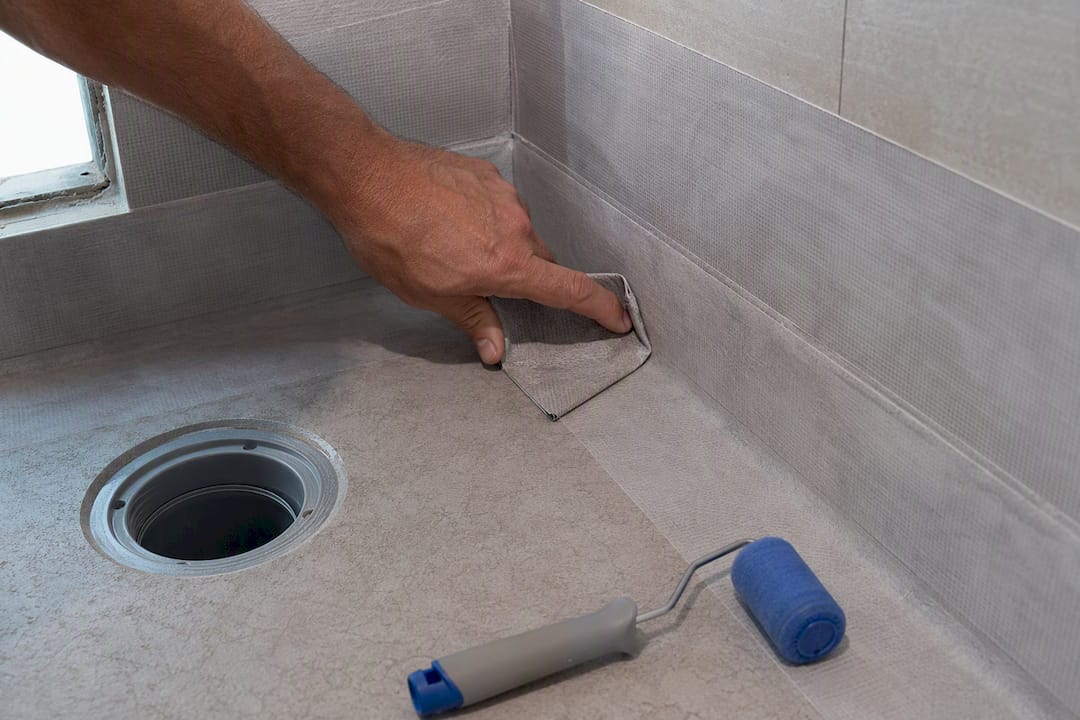
Get the waterproofing and drainage right, and a curbless shower is one of the better upgrades you can make to a bathroom, aesthetically and functionally. Get it wrong, and you've built an expensive, slow-motion leak into your subfloor.
Prioritize the flood test and an experienced contractor over the tile selection every time. Ventilation, heat, and a low-profile glass panel for modest privacy matter more to daily comfort than most homeowners expect going in. NG Construction SWFL approaches curbless bathroom remodels as design-build projects from the first estimate through final inspection, backed by a workmanship guarantee, because the aesthetic only holds up long term when the drainage does.
— Alston
Let Buildwithng Handle Your Curbless Shower Remodel
Buildwithng is the alternative to piecing together a curbless shower project through separate designers, plumbers, and tile setters. NG Construction SWFL manages the entire remodel, design, waterproofing plan, flood test, and final tile work, under one accountable team, so nothing falls through the cracks between subcontractors.

If you're weighing a curbless shower against a standard curbed layout for a Cape Coral, Fort Myers, Naples, Bonita Springs, or Estero bathroom, a site visit settles the real questions fast: whether your slab and plumbing can support proper slope, what a flood test schedule looks like for your timeline, and how to balance an open layout with enough warmth and privacy for daily use. Buildwithng offers free, no-obligation estimates on bathroom and kitchen remodels, backed by a workmanship guarantee on every project it completes. Request an estimate and ask to see examples of past curbless installations before you commit to a design.
Sources
For code and product evaluation questions, consult ICC-ES. For layout and accessibility best practices, NKBA publishes planning guidance worth reviewing before finalizing your design.
- Curbless shower: pros and cons — The Spruce
- Curbing the Curb: Pros & Cons to Building a Curbless Shower — Schluter
- Flood testing a shower — DIY Tile Guy
- Zero-Entry Shower vs. Curbed Shower — Ranney Blair
FAQ
Are Curbless Showers a Bad Idea?
Not inherently. A curbless shower becomes a problem only when slope, drain placement, or waterproofing are done poorly, not because the design itself is flawed. With correct installation and a passed flood test, curbless showers perform reliably for years.
How Do You Keep Water in a Curbless Shower?
Water stays contained through a combination of proper floor slope toward the drain, a drain positioned opposite the shower opening, and glass panels or partitions sized to block splash. Layered waterproofing membranes extending beyond the wet area add a critical backup layer since there's no physical curb to catch overflow.
What Is the Best Curbless Shower System?
There's no single best system across every bathroom, since the right choice depends on your floor plan and drain placement. A linear drain paired with a full-coverage waterproofing membrane and a flood-tested installation is the combination most contractors and manufacturers recommend for reliable performance.
Are Zero-Entry Showers Safe for Seniors?
Yes, zero-entry showers are widely considered one of the safer bathroom options for seniors because they eliminate the trip hazard a curb creates. Pairing the zero-threshold entry with slip-resistant tile, grab bars, and a shower seat rounds out a genuinely age-friendly setup, though precise slope and drainage work is still essential to keep the floor from becoming slippery outside the shower zone.
How Much More Does a Curbless Shower Cost Than a Curbed One?
A curbless shower typically costs more than a standard curbed shower because of the added subfloor work, linear drain hardware, and extended waterproofing it requires. Estimates to understand cost breakdowns are typically available from contractors before committing to a design.