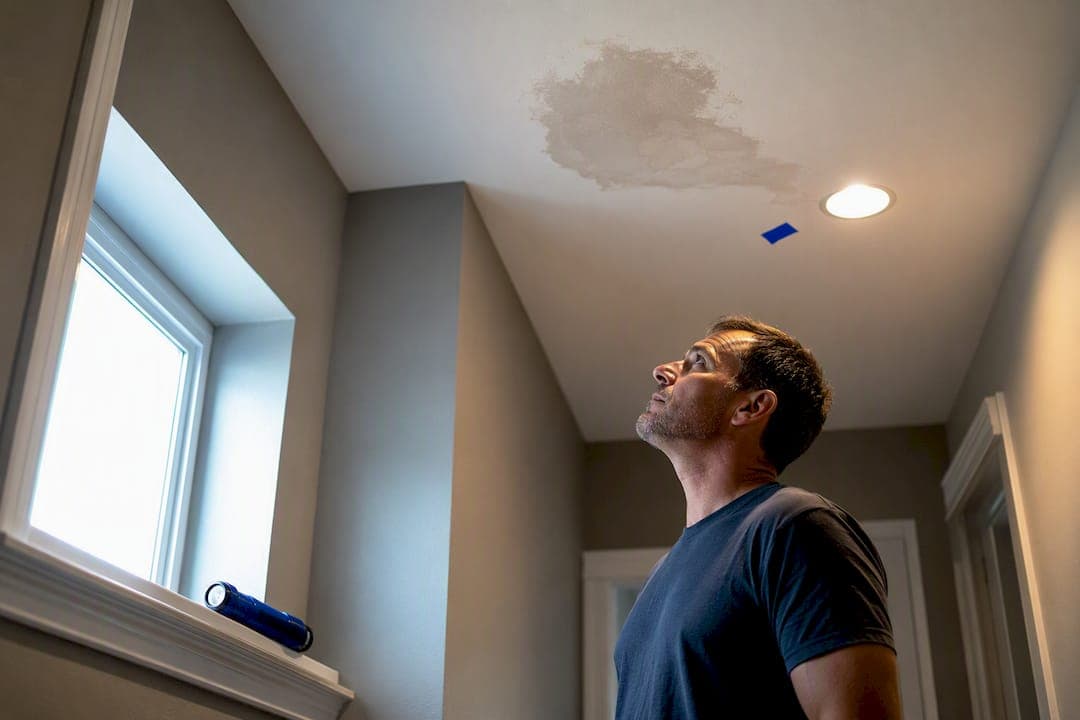
A contractor workmanship warranty is a promise that the labor performed on your home meets a workmanlike standard, and it works alongside broader construction warranty and legal protections. In practice, that means a short callback window, usually one year, plus longer legal remedies if a defect surfaces later. The moment you spot a problem, photograph it, write down the date, and notify your contractor exactly as your contract instructs.
TL;DR:
- The typical one-year callback period for workmanship defects can restart if the contractor repairs or replaces work, extending the warranty up to another year from the repair date.
- State laws, such as Florida's one-year defect warranty, and statutes of limitations or repose, often provide additional protection beyond the contractual period.
- Homeowners should document defects immediately with photos and detailed descriptions and notify their contractor through the contract's specified method to preserve their claim.
- Vague exclusions like "all water damage" can lead to disputes; requesting causation-based language helps shift the burden of proof and strengthens the warranty.
- Ensuring the start trigger is clearly defined, such as substantial completion or final payment, is critical to prevent claims from being unfairly denied due to ambiguous contract language.
Table of Contents
- What Is a Contractor Workmanship Warranty? Explicit vs. Implied
- What a Home Improvement Warranty Covers and What It Excludes
- How Long Does a Workmanship Guarantee Last?
- How to File a Warranty Claim and Protect Your Evidence
- Drafting a Stronger Contractor Service Agreement Before You Sign
- How Buildwithng Approaches the Workmanship Guarantee
- Why Most Homeowners Read Their Warranty Wrong
- Get a Workmanship Guarantee Built Into Your Next Project
- Sources
- FAQ
What Is a Contractor Workmanship Warranty? Explicit vs. Implied
A workmanship warranty is a promise that labor, not materials, was performed with the skill and care a competent contractor would use. That standard, often called "workmanlike manner," doesn't demand perfection. It demands craftsmanship consistent with accepted trade practices.
Warranties arrive in two forms, and homeowners often confuse them:
- Explicit warranties are written into your contract. They spell out duration, coverage, and remedies in black and white.
- Implied warranties exist even without a written promise. Courts in many states, including Ohio's Supreme Court in its ruling on the duty to construct in a workmanlike manner, have treated this duty as baked into every construction contract, sometimes as one that can't be waived.
Coverage varies significantly by state. Some jurisdictions recognize strong implied warranties for new home construction; others limit protection to what's written down. Before you sign anything, know which rules govern your project, because the same crack in a wall can mean very different things depending on where your house sits.
What a Home Improvement Warranty Covers and What It Excludes
A solid contractor workmanship warranty covers defects caused by the labor itself, not by the materials someone else manufactured. Coverage typically includes:
- Defective installation of fixtures, flooring, or framing
- Improper technique that leads to leaks, cracks, or structural issues
- Damage the contractor's crew caused to existing parts of your home
Exclusions matter just as much as coverage, and this is where many homeowners get burned. Common exclusions include manufacturer defects (a faulty water heater isn't your contractor's fault), owner-made modifications after the work is done, normal wear and settling, and acts of God like hurricanes or flooding.
Pro Tip: Push back on any warranty that uses blanket exclusion language like "all water damage excluded." Ask for exclusions tied to causation, such as "excludes water damage not caused by installation defects." That single phrase shifts the burden back where it belongs.
Vague exclusion wording is one of the most common sources of disputes, because it lets a contractor deny a claim regardless of what actually caused the problem.
How Long Does a Workmanship Guarantee Last?
Most contracts specify a one-year callback period for workmanship defects, separate from any longer implied warranty that state law might extend. During that first year, the burden of proof usually favors you. After it expires, if you're relying on an implied warranty instead of contract language, you may need to show the defect stems from the original construction, which is a harder case to make.
Here's a detail many homeowners miss: when a contractor repairs or replaces defective work, the warranty clock often restarts for that specific repair. The federal warranty of construction clause, FAR 52.246-21, makes this explicit for government contracts, running the warranty for one year from the date of repair or replacement rather than the original completion date. Private contracts frequently mirror this structure.
Statutory deadlines shape everything. A statute of limitations sets how long you have to file a lawsuit after discovering a defect, typically 3 to 6 years depending on the state. A statute of repose sets an absolute outside deadline from completion, regardless of discovery, often ranging from 4 to 12 years. Both differ from your contract's callback period, and both vary by jurisdiction.
Florida offers a concrete example. Under Florida statute 553.837, builders of newly constructed homes must warrant against construction defects that cause a material violation of the Florida Building Code for one year after conveyance or initial occupancy. That statute excludes appliances already covered by manufacturer warranties, along with normal wear or owner-caused alterations. If you're building in Southwest Florida, that one-year clock starts the day you take possession, not the day the crew packed up their tools.
How to File a Warranty Claim and Protect Your Evidence
The way you document a defect can decide whether your claim succeeds or gets denied on a technicality. Follow these steps the moment you notice a problem:
- Photograph and video the defect immediately, including wide shots for context and close-ups for detail.
- Write down the date you discovered it, along with any relevant invoices, permit numbers, or product serial numbers.
- Notify your contractor using the exact method your contract requires, whether that's certified mail, email, or a specific claim form.
- Grant reasonable access for inspection rather than blocking the contractor from seeing the problem firsthand.
- Avoid hiring a third party to fix it before the contractor inspects, unless it's a genuine emergency like an active leak flooding your kitchen.
- Bring in an independent inspector if the contractor disputes the cause or denies the claim outright.
Regulatory guidance on defect reporting consistently emphasizes preserving evidence and documentation before authorizing repairs, and that guidance applies whether you're dealing with a kitchen remodel or a full custom build.
Pro Tip: When you describe the defect to your contractor, report symptoms and location. Don't guess at the cause. Writing "water stain on ceiling below upstairs bathroom" protects you far better than "the plumber must have installed the pipe wrong," which could be used against you if the real cause turns out to be something else entirely.
Drafting a Stronger Contractor Service Agreement Before You Sign
A written workmanship warranty should never leave room for interpretation. Before signing a contractor service agreement, confirm it addresses each of the following:
- Clear scope of what work is covered
- An objective start trigger, not a vague one
- Stated duration for both original and repaired work
- Exclusions tied to causation, not blanket categories
- A defined notice method and response deadline
- Remedies (repair, replacement, or refund)
- Whether repairs restart the warranty clock
- Transferability if you sell the home
- Governing state law
| Warranty element | Why it matters |
|---|---|
| Start trigger | Ambiguous dates (like "completion") cause disputes; use substantial completion, certificate of occupancy, or final payment date instead |
| Coordination with manufacturer warranties | Register product warranties separately; workmanship coverage won't fix a bad appliance |
| Notice method | A missed notification deadline can void an otherwise valid claim |
A sample workmanship warranty template can help you compare your contract's language against a neutral standard before you commit.
How Buildwithng Approaches the Workmanship Guarantee
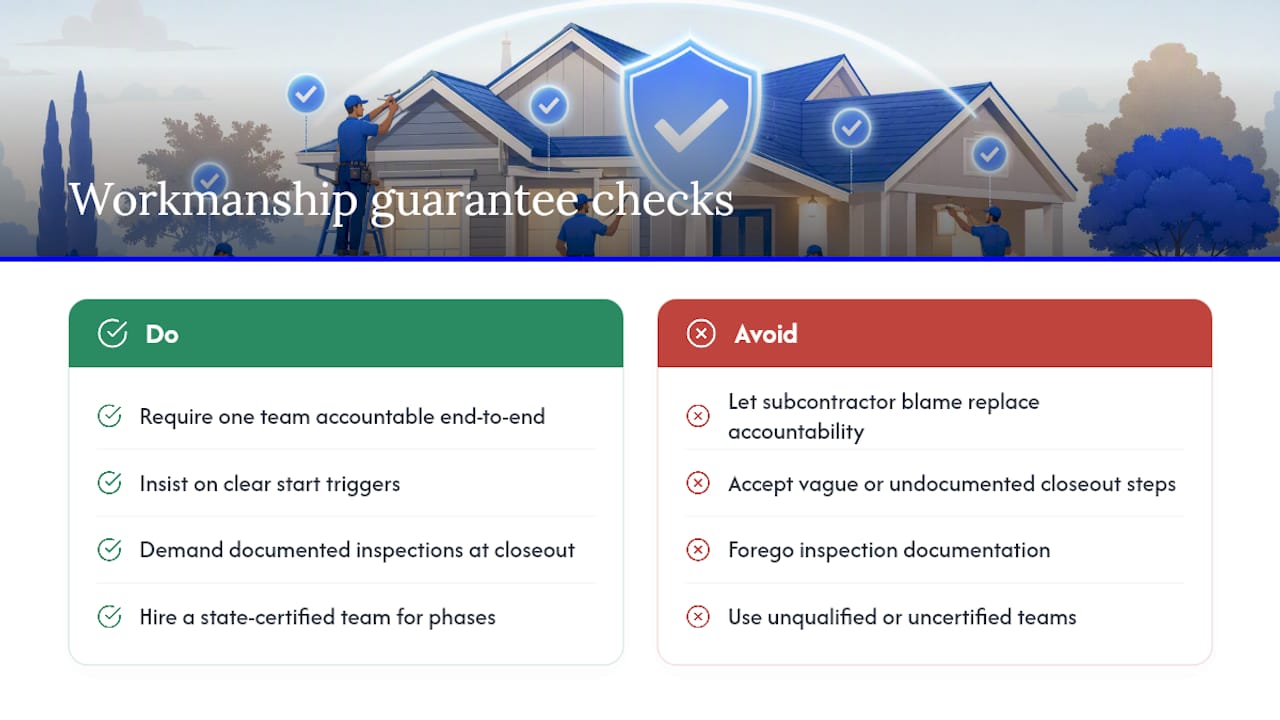
Accountability sits at the center of how Buildwithng handles every project across Cape Coral, Fort Myers, and the rest of Southwest Florida. That means one team stays responsible from initial design through final inspection, rather than passing blame between subcontractors when something needs correcting.
Clear start triggers and documented inspections aren't an afterthought. They're built into how projects close out, which is exactly the kind of objective, causation-focused approach this guide recommends homeowners look for before signing anything. When a workmanship guarantee is paired with a state-certified team managing every phase, the ambiguity that causes most warranty disputes simply has less room to creep in.
Why Most Homeowners Read Their Warranty Wrong
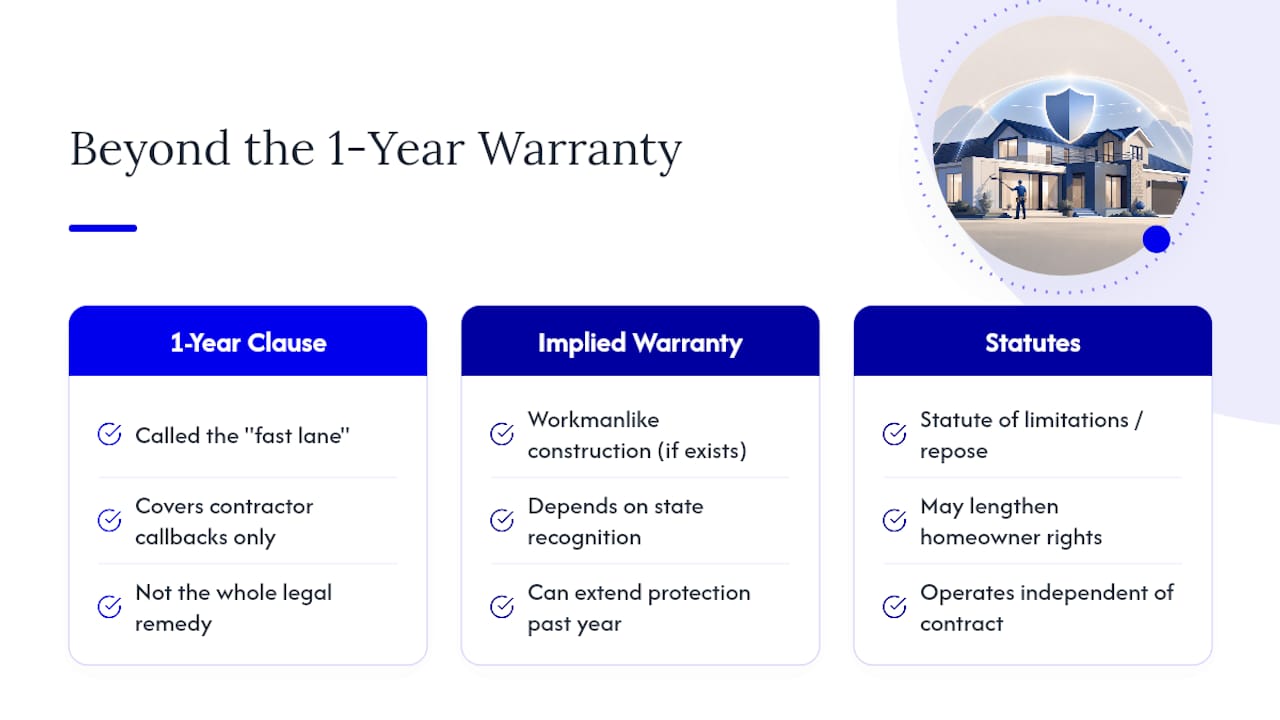
The biggest mistake homeowners make isn't skipping the warranty section. It's assuming a one-year callback period is the whole story. That single year is just the fast lane. The implied warranty of workmanlike construction, where it exists, and your state's statute of limitations or repose can extend your rights far beyond what's printed on page four of your contract.
Conventional advice tells homeowners to "read the warranty carefully," which is true but incomplete. What actually protects you is knowing which exclusions are causation based and which are blanket denials dressed up in legal language. A contractor who's confident in their work has no reason to hide behind vague exclusions, and that's the real tell.
If there's one thing to prioritize before signing anything, it's the start trigger. An ambiguous completion date has sunk more legitimate claims than any material defect ever has. Fix that one clause, and most of the other protections in this guide fall into place behind it.
— Alston
Get a Workmanship Guarantee Built Into Your Next Project
Buildwithng backs every project with a workmanship guarantee and one accountable team managing design through final inspection, so you're never stuck chasing down subcontractors when something needs a second look.

That structure matters more than most homeowners realize until they're mid-dispute with a contractor who's already moved on to the next job. Whether you're planning custom home building, a full renovation, a kitchen and bath remodel, a room addition, or a commercial build-out, professional contractors manage every phase with clear documentation and objective start triggers, the exact protections this guide recommends you look for. Request a free, no-obligation estimate and ask directly how the workmanship guarantee applies to your project before you sign a thing.
This article is general information, not a substitute for advice from a qualified lawyer. Consult a qualified legal professional about your own circumstances before acting on anything here.
Sources
- Chapter 553 Section 837 - 2024 Florida Statutes - The Florida Senate
- FAR 52.246-21 (Warranty of Construction) — Cornell Law
- Workmanship Warranty Template — PandaDoc
- Construction Warranty Types: What Are Contractors Responsible for — and for How Long? — Procore
FAQ
How Long Does a Contractor Have to Warranty Work?
Most contracts set a one-year callback period for workmanship defects, though repaired or replaced work often gets a fresh one-year clock starting from the repair date, a structure reflected in the federal warranty of construction clause. Beyond that contractual period, state statutes of limitations and repose can extend your legal options for several more years.
How Long Is a Workmanship Guarantee Typically Enforced?
The standard callback window is one year, but enforcement doesn't stop there if an implied warranty of workmanlike construction applies in your state. Florida law, for example, requires a minimum one-year builder warranty for newly constructed homes covering material building code violations.
What Is Considered a Workmanship Warranty?
A workmanship warranty is a promise that labor was performed with the skill and care expected of a competent contractor, covering issues like improper installation or contractor-caused damage. It's distinct from a manufacturer warranty, which covers product defects rather than installation quality.
How Long Is a Contractor Liable for Their Work?
Liability depends on three overlapping timelines: the contractual callback period (usually one year), the statute of limitations for filing suit after discovering a defect, and the statute of repose, an absolute deadline from completion regardless of discovery. These ranges vary by state, so checking your local rules is essential before assuming your options have expired.
What Should a Written Workmanship Warranty Include?
A strong warranty spells out scope, an objective start trigger like substantial completion or final payment, duration, causation-based exclusions, a notice method, and remedies. It should also state whether repaired work restarts the warranty clock and whether the warranty transfers if you sell the home.