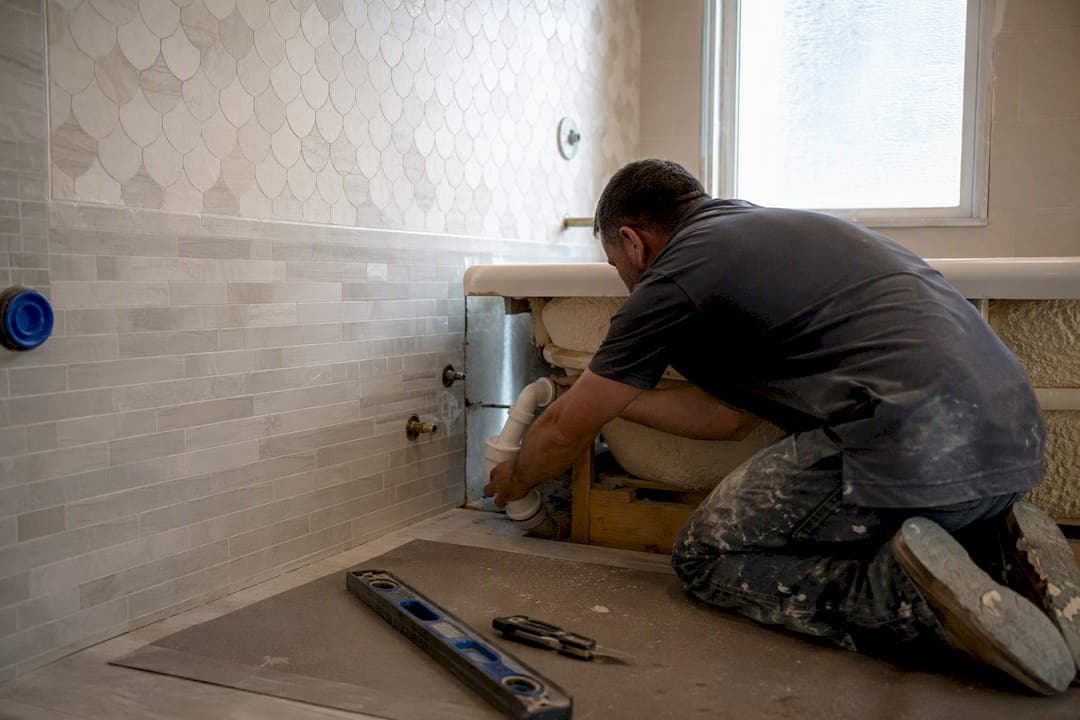
A mid-range 60 square foot hall bathroom remodel runs $13,000 to $25,000 in 2026, with most homeowners landing near $18,500 once materials and labor are combined. Three factors move that number more than anything else: size (small rooms cost more per square foot), scope (a cosmetic refresh versus a full gut), and finish level (stock fixtures versus custom tile and stone).
Here's how those bands typically break down:
- Refresh (paint, fixtures, surface swaps): $2,500 to $8,000
- Pull-and-replace (new tile, vanity, toilet, same layout): $9,000 to $18,000
- Full gut (layout changes, new plumbing runs, full waterproofing): $20,000 to $35,000+
Quick benchmark: The Census American Housing Survey pegs the median contractor-done bathroom job at $8,497, well below the $13,679 mean. That gap tells you something important before you even open a spreadsheet: the "average" you see quoted online is usually skewed upward by a handful of expensive, full-scope jobs.
Key Takeaways
A mid-range bathroom remodel typically costs $13,000 to $25,000, but layout changes, finish level, and a missing contingency fund are what push real projects past that range.
| Point | Details |
|---|---|
| Know your benchmark | A standard 60 sq ft hall bath remodel runs $13,000 to $25,000, averaging near $18,500. |
| Median beats mean | The true median contractor job is $8,497, well below the $13,679 mean most guides quote. |
| Keep the layout | Leaving plumbing in place avoids $2,000 to $8,000 in added drain and supply line work. |
| Budget a contingency | Set aside 10% to 15% for hidden issues, more for homes over 20 years old. |
| Get a line-item estimate | Buildwithng breaks down free estimates by phase so Southwest Florida homeowners see the true bathroom remodel cost before committing. |
Table of Contents
- Typical Bathroom Renovation Cost Ranges by Size and Scope
- What Drives Bathroom Remodeling Expenses the Most
- Bathroom Remodel Cost Breakdown by Line Item
- Bathroom Renovation Cost per Square Foot by Scope
- How to Set a Bathroom Remodel Budget (And Where to Save)
- Bathroom Remodel Timeline: How Long Each Phase Takes
- Hidden Costs and Why You Need a Contingency Fund
- Is a Bathroom Remodel Worth It for Resale Value?
- How Buildwithng Scopes and Estimates a Bathroom Remodel
- What the Numbers Actually Tell Homeowners
- Get a Line-Item Estimate for Your Bathroom Remodel
- Sources
Typical Bathroom Renovation Cost Ranges by Size and Scope
The size of your bathroom sets the floor for your project. The scope you choose sets how high above that floor you climb. Here's how the two interact across three common room sizes:
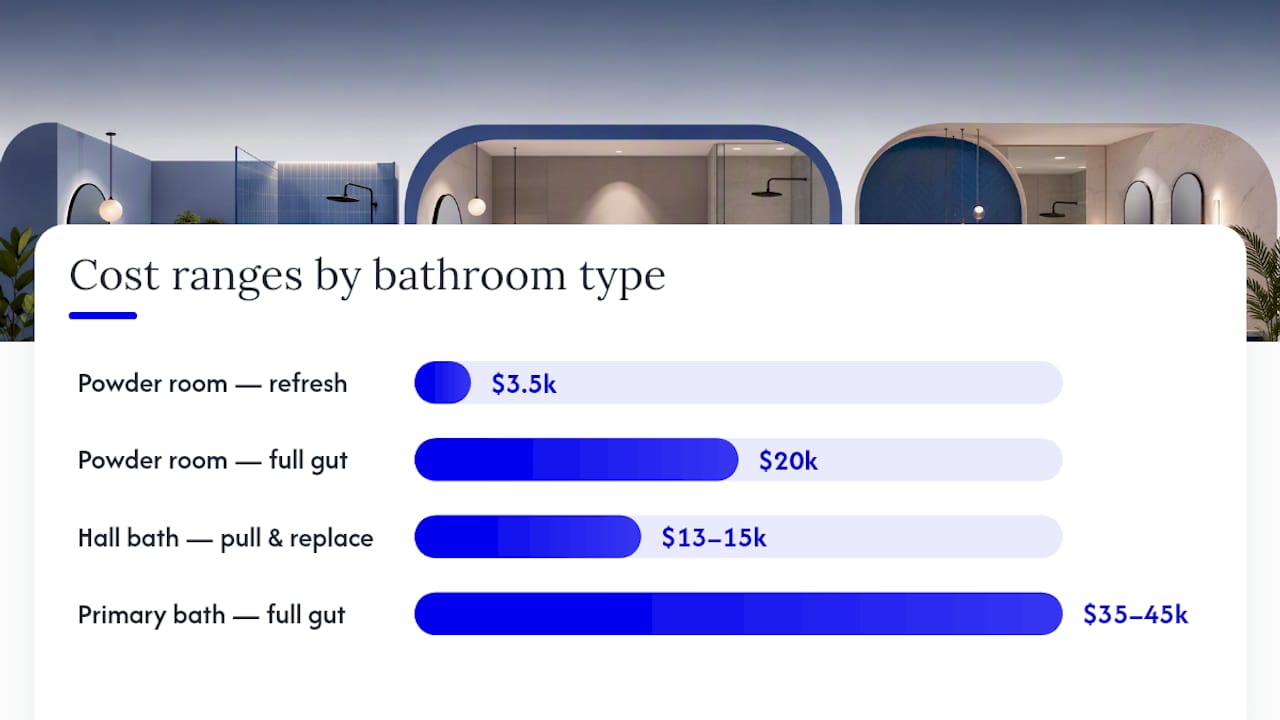
Notice that the powder room's full-gut ceiling ($20,000) nearly matches the hall bath's pull-and-replace ceiling. That's not a typo. Small rooms carry the same fixed costs as large ones. Whether you're renovating a 35 square foot powder room or a 100 square foot primary suite, you still pay for a plumber's mobilization, a permit application, and a dumpster rental. Spread those fixed costs across less floor space and your per-square-foot number climbs, which is why a tiny bathroom rarely feels proportionally cheaper.
Some quick examples to match against your own plan:
- A powder room refresh with a new vanity and paint often lands around $3,500.
- A hall bath pull-and-replace with new tile, vanity, and toilet typically totals $13,000 to $15,000.
- A primary bath full gut with a relocated shower and double vanity commonly reaches $35,000 to $45,000.
What Drives Bathroom Remodeling Expenses the Most
Labor eats the largest share of most bathroom budgets, often making up a substantial portion of the total, depending on how many trades touch the job. A project that needs a plumber, an electrician, a tile setter, and a general contractor coordinating all three will always cost more per square foot than one where a single crew handles everything.
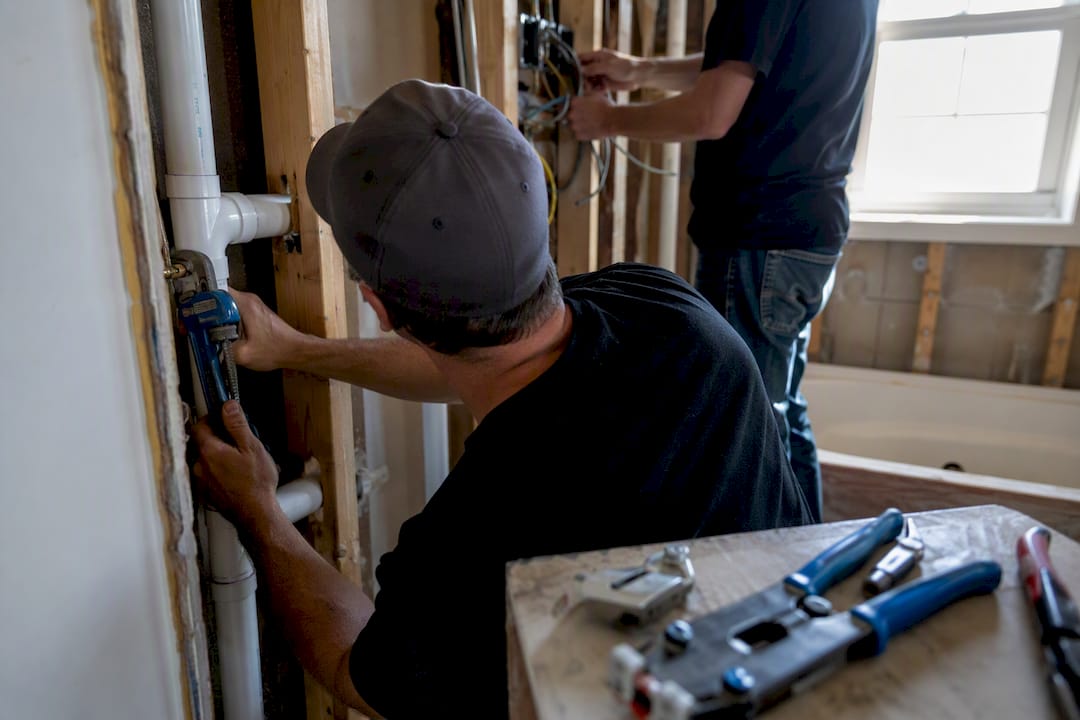
Layout changes are the next biggest lever. Moving a toilet, shower, or sink even a few feet means new drain lines, new supply lines, and sometimes a new vent stack. That single decision typically adds several thousand dollars to a standard project, and it's the most common reason a "simple update" turns into a significantly more expensive job.
Finish level does the rest of the work. A stock vanity from a home center might run $400; a custom cabinetry piece with soft-close drawers and a stone top can run $2,500 or more. Quartz countertops typically add $50 to $100 per square foot over laminate, while natural stone (marble, granite) can push that higher depending on the slab.
Permits and inspections matter too, though they're smaller line items:
- Most municipalities charge $50 to $500 for a bathroom remodel permit.
- Permits are typically required when plumbing, electrical, or structural work is involved, not for cosmetic swaps.
- Inspection delays are a leading cause of schedule slippage, covered in more detail below.
Pro Tip: Ask your contractor for a fixed-fee bid on tile installation, priced per square foot with labor hours listed separately from materials. That single request makes it far easier to compare quotes apples-to-apples.
Bathroom Remodel Cost Breakdown by Line Item
A representative mid-range hall bath budget (around $18,500) breaks down roughly like this. Use it as a checklist against any contractor quote you receive.
These line-item figures come from national estimator models, and they shift based on a few predictable factors:
- Tile complexity (herringbone patterns, mosaic accents, large-format porcelain) adds labor hours fast, since intricate patterns take longer to cut and set than a straight running bond.
- Custom cabinetry versus stock vanities can swing that single line item by $2,000 or more.
- Permit needs vary by municipality and by whether you're touching plumbing or electrical, which changes both the fee and the inspection timeline.
Compare any quote you receive against this structure. If a contractor's bid skips a line item entirely, like waterproofing membrane under tile, that's worth asking about before you sign anything.
Bathroom Renovation Cost per Square Foot by Scope
Per-square-foot pricing is the fastest way to sanity-check a quote once you know your room's dimensions. National figures span roughly $75 to $1,100 per square foot depending on scope and finish, with mid-range pull-and-replace work typically landing between $220 and $420 per square foot.
- Refresh: $75–$150 per sq ft
- Pull-and-replace, mid-range finish: $220–$420 per sq ft
- Full gut, upscale finish: $450–$1,100+ per sq ft
Metro location shifts these numbers meaningfully. Lower-cost regions, much of the Midwest and parts of the South, tend to see standard hall bath jobs land around $11,000 to $21,500, while high-cost metros like New York City, the San Francisco Bay Area, Los Angeles, Seattle, and Washington DC push that same scope to $16,500 to $31,500. Labor shortages in specialty trades, tile setters and licensed plumbers in particular, have widened this gap since 2022.
Get two or three local contractor quotes before finalizing your budget. National calculators give you a starting range, but only a bid from a crew working in your zip code accounts for local permit fees, labor rates, and material delivery costs.
How to Set a Bathroom Remodel Budget (And Where to Save)
Start by deciding what you're actually solving for: cosmetic fatigue, or a bathroom that no longer functions well. That answer determines your scope more than any price sheet.
- $5,000 cosmetic refresh: New paint, updated lighting and hardware, a fresh mirror, and possibly a new toilet. Excludes new tile, plumbing relocation, or vanity replacement.
- $10,000 limited pull-and-replace: New vanity and countertop, new toilet, refinished or partially retiled floor, updated lighting, same footprint. Excludes moving plumbing or full wall tile.
- Keep the layout. Leaving toilets, showers, and sinks in their existing locations avoids new drain runs entirely, often saving thousands of dollars compared to any plan that repositions plumbing.
- Reuse sound tile or fixtures where the substrate is solid, and choose stock cabinetry over custom builds.
- Phase the work if cash flow is tight: finishes and hardware can wait a season; waterproofing and plumbing cannot.
Pro Tip: Homeowners can usually handle painting, hardware swaps, and demo of non-structural finishes themselves. Plumbing, electrical, and anything touching a load-bearing wall needs a licensed trade, both for safety and to keep your permit valid.
Bathroom Remodel Timeline: How Long Each Phase Takes
Every project moves through the same five phases, just at different speeds depending on scope: estimate and permitting, demolition, rough trades (plumbing and electrical), tile and finish work, then punchlist and final inspection.
- Refresh: 1 to 2 weeks total, often with minimal disruption to daily use.
- Pull-and-replace: 2 to 4 weeks, including a few days without a functioning shower.
- Full gut: 4 to 8+ weeks, especially when layout changes require new permits and multiple inspection sign-offs.
Schedule slippage rarely comes from the work itself. It comes from material lead times (custom vanities and imported tile can take 4 to 6 weeks to arrive), subcontractor availability in a tight labor market, and inspection delays when a municipal inspector's schedule doesn't align with your contractor's.
Hidden Costs and Why You Need a Contingency Fund
Behind-the-wall surprises are common enough that experienced contractors build them into every conversation before demo even starts. The usual suspects: water-damaged subflooring, corroded or leaking supply lines, outdated wiring that doesn't meet current code, mold behind old tile, and framing that was never quite square to begin with.
Industry guidance consistently recommends setting aside 10% to 15% of your budget as contingency for a typical home, and 15% to 20% or more for older homes or any project where the scope might expand mid-demo.
- Request a pre-demo inspection or moisture check if your home is more than 20 years old.
- Ask your contractor about staged, partial demolition to verify subfloor and framing before finish materials get ordered.
- Get change-order rules in writing before you sign, so a $600 wiring surprise doesn't turn into a $3,000 argument.
Pro Tip: A staged demo costs a little more upfront in labor hours, but it's cheap insurance against ordering $4,000 in tile before anyone finds out the subfloor needs replacing.
Is a Bathroom Remodel Worth It for Resale Value?
A mid-range bathroom remodel typically recoups 60% to 70% of its cost at resale, based on Remodeling Magazine's Cost vs. Value data, though the exact figure moves with your local market and how your finish level compares to neighboring homes.
- A cosmetic refresh often out-earns a full gut on ROI, since it costs less to begin with and still solves the "dated bathroom" problem buyers notice first.
- Over-improving relative to your neighborhood, marble everything in a starter-home market, rarely pays back proportionally.
- If you're not selling soon, resale math matters less than daily comfort. A bathroom you use every day for the next ten years has value a spreadsheet won't capture.
How Buildwithng Scopes and Estimates a Bathroom Remodel
A strong estimate should read like the line-item table above, not a single lump-sum number. Buildwithng provides free, no-obligation estimates that break down demolition, plumbing, tile, and fixtures separately, so Southwest Florida homeowners in Cape Coral, Fort Myers, Naples, Bonita Springs, and Estero can see exactly where their money goes.
What to expect in a solid estimate:
- Detailed line items matching the categories in your own budget research.
- A fixed project schedule with phase-by-phase milestones.
- A stated contingency plan for behind-the-wall discoveries, not a vague promise to "handle it later."
Buildwithng manages design through final inspection under one accountable team, backed by a workmanship guarantee. Before your consultation, have your rough square footage, must-keep fixtures, and target budget range ready.
What the Numbers Actually Tell Homeowners
Most bathroom remodel guides lead with the mean because it's a bigger, more attention-grabbing number. That's backward. The median, $8,497 against a mean of $13,679, tells you what half of homeowners actually paid, and it's the number that should anchor your first budget conversation, not the eye-catching average pulled from a mix of modest refreshes and gut renovations with moved plumbing.
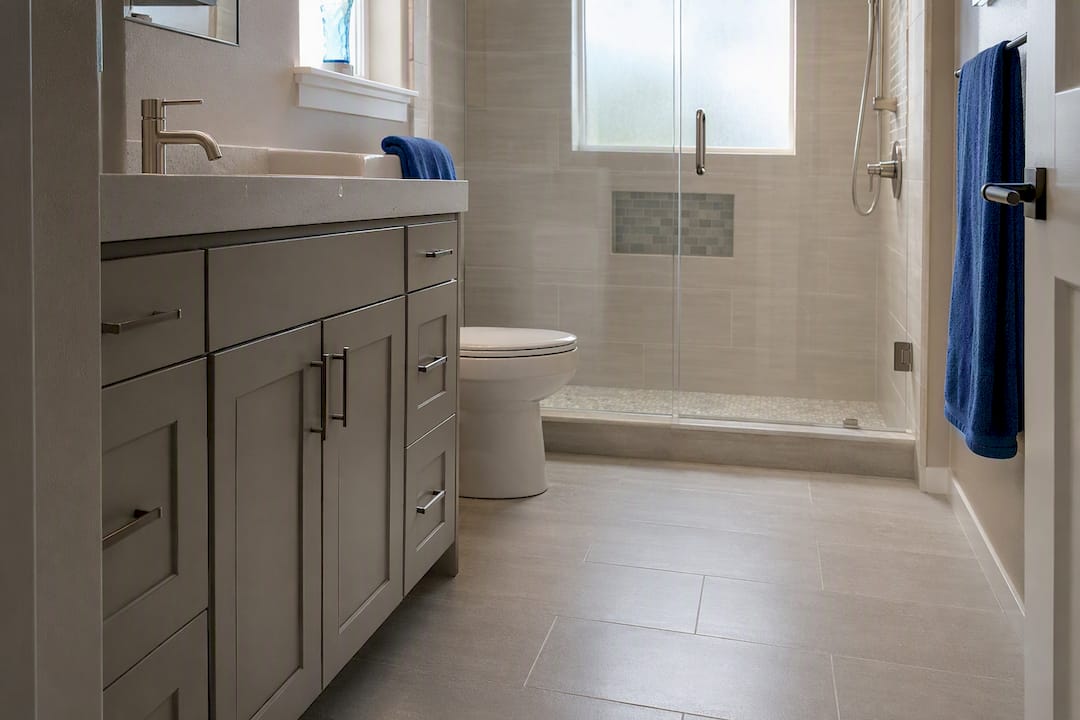
Keeping your layout intact is the single biggest lever available to any homeowner, full stop. It's a bigger cost swing than choosing between quartz and laminate, and it costs nothing to decide.
If you take one thing from this guide, prioritize the line-item bid over the lump-sum quote. A contractor willing to break down tile labor per square foot and price plumbing rough-in as a fixed line is telling you something about how they run a job site. One who won't is asking you to trust a number you can't verify.
— Alston
Get a Line-Item Estimate for Your Bathroom Remodel
Southwest Florida homeowners weighing a refresh against a full gut don't have to guess at where their money goes. Buildwithng builds every estimate as a detailed breakdown, not a single number, so you can see exactly what demolition, plumbing, tile, and fixtures cost before a single wall comes down.

That transparency matters most in the exact moments this guide covers: deciding whether to move a shower drain, whether to spring for quartz over laminate, and how much contingency your specific home actually needs. Buildwithng's design-build team manages the project from initial design through final inspection, backed by a workmanship guarantee, so you're working with one accountable contractor instead of coordinating separate trades yourself. If you're ready to see real numbers for your bathroom, request a free estimate and bring your rough square footage and target budget to the first conversation.
Sources
- Bathroom Remodel Cost (2026) — Ranges by Size & Scope
- Bathroom Remodel Cost Calculator (2026): What Americans Actually Paid | Calcatrice
- This Old House — Common surprises and contingency guidance
- Bathroom Remodel Cost Guide 2026: Full Breakdown by Scope, Materials & State | CostPrism