Bathroom design trends 2026 pivot toward personalized, warm, craft-forward spaces built around tactile materials, sculptural fixtures, wellness technology, and accessibility planned in from day one. The all-white, all-gray era is giving way to rooms that behave more like living environments than showrooms. What follows is practical guidance for turning any of it into a remodel that holds up.
TL;DR:
- Microcement surfaces are favored for their seamless, textured appearance, especially on shower walls and vanity surrounds, but they require active maintenance.
- Installing wellness amenities like programmable showers, heated floors, and steam systems early during framing prevents costly retrofits and future disruptions.
- Building accessibility features such as reinforced walls and linear drains is most cost-effective when included in initial framing rather than added later.
- Warm, earthy color palettes are now preferred by 75% of experts, but they demand proper lighting (2700K to 3000K) to maintain their visual warmth.
- Are you planning a bathroom remodel? Prioritize structural and plumbing decisions first, then choose fixtures and finishes later to avoid unexpected change orders.
Table of Contents
- Bathroom Design Trends 2026: The Trends Worth Knowing
- Materials That Earn Their Place in 2026
- Choosing a Warm Palette Without Overcommitting
- Tile Trends: When to Go Bold and When to Go Big
- Wellness Features Worth the Plumbing Work
- Building Accessibility In From the Start
- How to Apply These Trends to Your Own Remodel
- What We're Seeing on Real Job Sites
- Bring Your 2026 Bathroom Vision to Buildwithng
- Sources
Bathroom Design Trends 2026: The Trends Worth Knowing
The NKBA 2026 Bath Trends Report describes a clear shift: bathrooms are moving away from standardized luxury and toward spaces built around how a specific household actually lives. That framing shows up across nearly every 2026 bathroom style worth discussing.
Here's what's driving popular bathroom designs in 2026, and where each idea actually belongs in a remodel:
- Personalization over showroom polish. Instead of copying a magazine layout, homeowners are designing around morning routines, storage habits, and who actually uses the room. Apply it by mapping your daily sequence before you draw a layout.
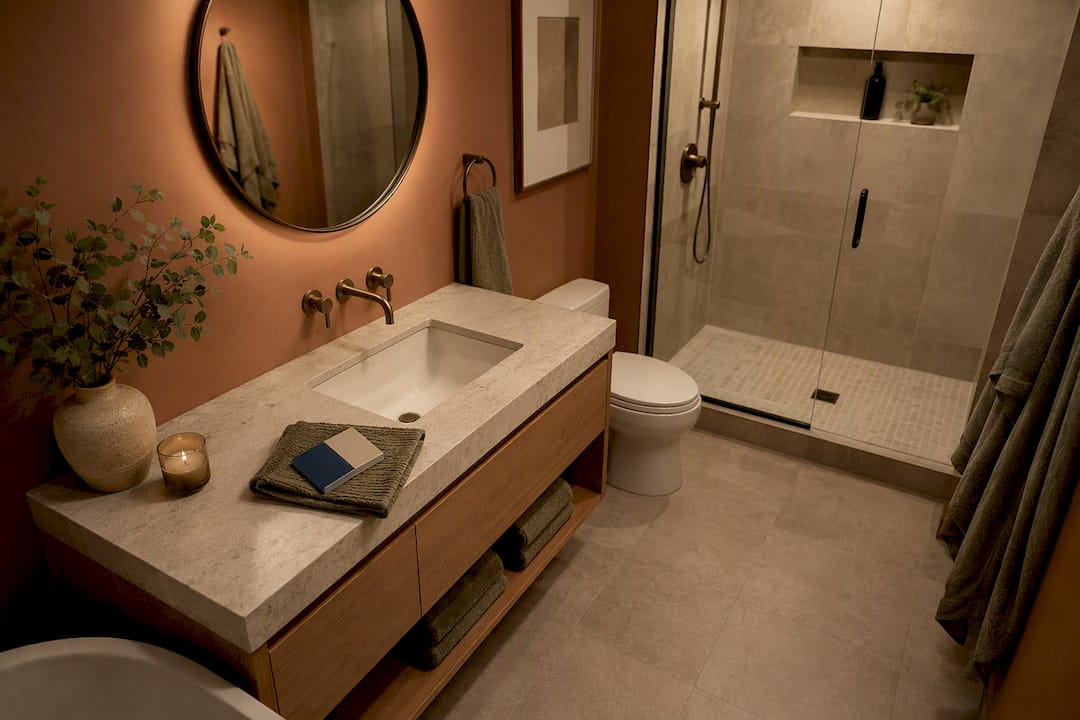
- Warm, earthy palettes. Terracotta, olive, and clay tones are replacing cool grays. Apply it through paint and textiles first, then commit to tile once you've lived with the color.
- Sculptural fixtures. Freestanding tubs and curved vanities are becoming focal points rather than afterthoughts. Apply it by giving one fixture room to breathe instead of crowding the layout.
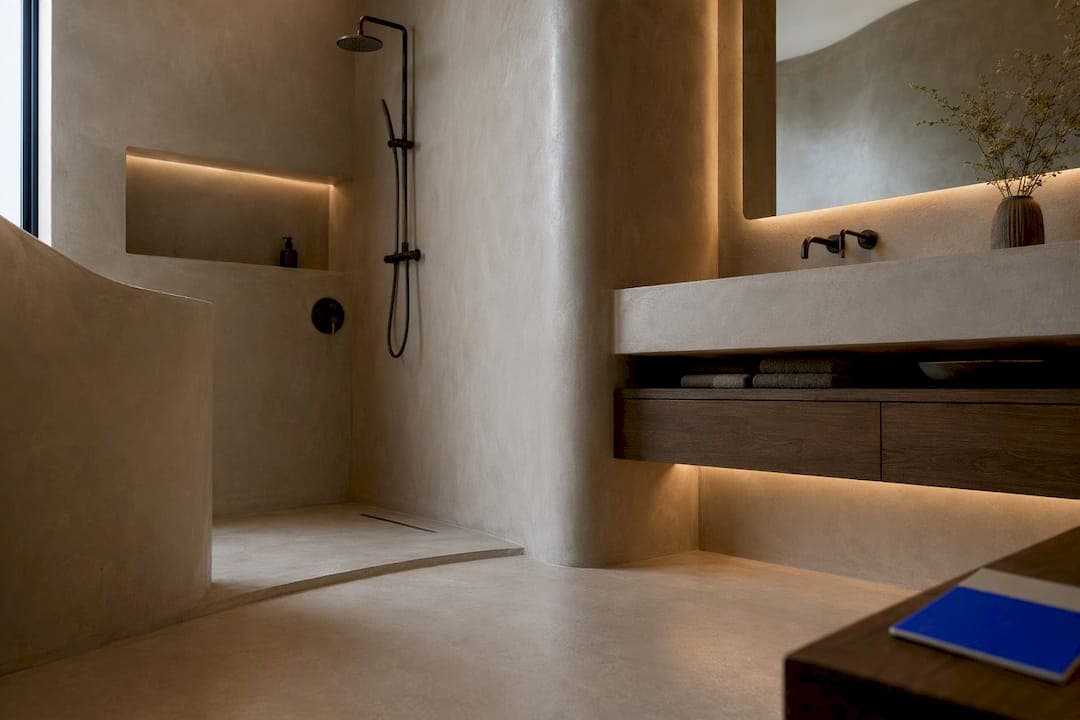
- Microcement and patina surfaces. These continuous, hand-finished materials add texture without grout lines. Apply it to shower walls or vanity surrounds where seamlessness matters most.
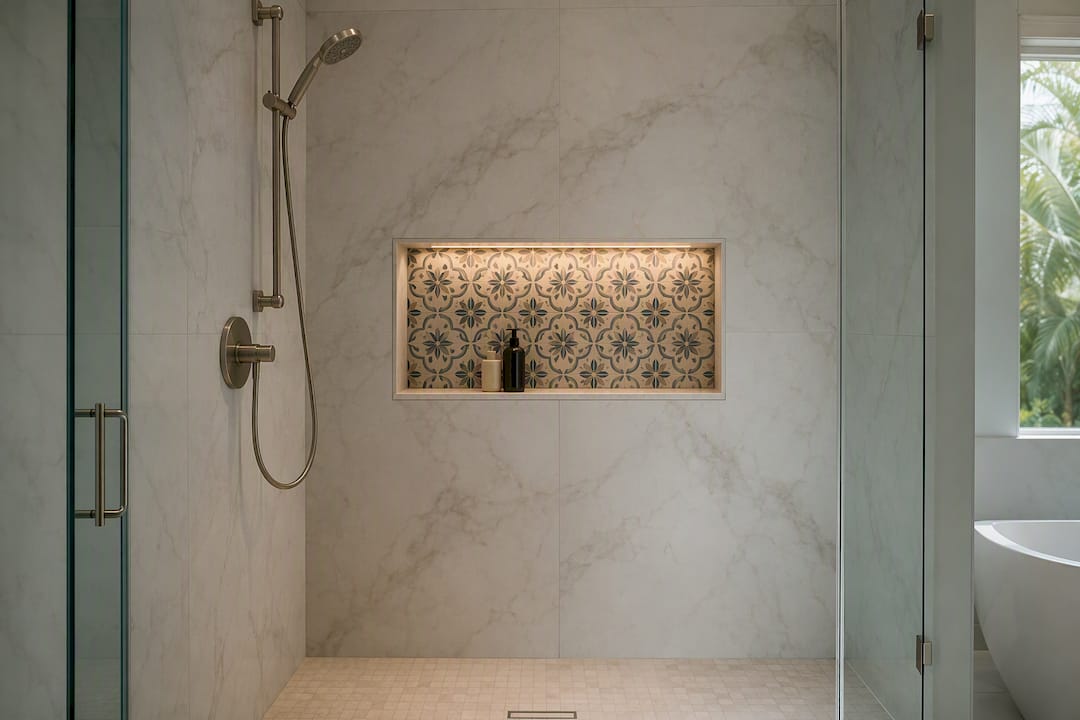
- Artful, statement tile. Hand-painted and patterned tile is showing up as accents, not full-room coverage. Apply it to a shower niche or backsplash, not the entire floor.
- Wellness features. Programmable showers, heated floors, and steam are moving from luxury add-on to expected upgrade. Apply it during rough plumbing, before walls close up.
- Frameless, slab-style showers with built-in accessibility. Low thresholds and linear drains are now a design feature, not a medical retrofit. Apply it at the framing stage, regardless of current mobility needs.
- Craftsmanship-forward hardware. Knurled, fluted, and hammered finishes are replacing chrome uniformity. Designers quoted by BHG describe this as "quiet luxury" expressed through touchpoints. Apply it on faucets, cabinet pulls, and towel bars where hands actually make contact.
Materials That Earn Their Place in 2026
Microcement is leading the materials conversation this year. It's a mineral based, trowel applied finish that creates a continuous surface with no grout lines, and it works especially well on curved shower walls, floating vanity surrounds, and niches where seams would otherwise break up the design.
Patina metals, think unlacquered brass or living bronze, are the hardware equivalent. They're meant to darken and shift with use rather than stay showroom bright, which is the opposite job of a polished chrome faucet. Homeowners considering these finishes should ask their contractor for a written maintenance plan, since patina and microcement surfaces need active care to age the way they're designed to instead of just staining.
Honed stone delivers a matte, tactile look but needs regular sealing, especially on shower floors and vanity tops where water sits. If the budget doesn't stretch that far, textured porcelain and engineered stone now mimic these finishes convincingly at a fraction of the cost and upkeep.
Choosing a Warm Palette Without Overcommitting
Fixr's industry survey found that 75% of design experts now favor warm, earthy palettes over cool neutrals, a real reversal from the gray dominated decade before it. Terracotta, clay, and herbal green pair naturally with wood tones and honed stone, and they read warmer under the right lighting than a cool white ever could.
The safest sequence is to test before you commit. Paint and textiles cost little to swap if a color misses the mark; tile and stone don't. Save the boldest color decision for something replaceable, and use it to gauge whether you want that tone permanently on the walls.
Lighting matters more than most homeowners expect. Warm finishes look flat or muddy under cool, blue-white bulbs, so stick to 2700K to 3000K fixtures to keep terracotta and wood tones looking intentional rather than dated.
Tile Trends: When to Go Bold and When to Go Big
Hand-painted and patterned tile works best in contained doses, a shower niche, a powder room floor, or a backsplash, where it becomes a focal point instead of visual noise. The Spruce points to this restraint as a defining feature of the current wave of textured, craft-driven surfaces.
Slab showers solve a different problem: fewer grout lines, easier cleaning, and a more expansive feel in smaller bathrooms. Fixr's survey found 60% of design experts now favor slab showers over tiled ones, largely for that low-maintenance payoff. Slab costs more upfront, but it's worth it in showers used daily by a full household. Checkerboard floors, sweeping curved layouts, and small-format mosaics remain the go-to approaches when a statement tile pattern is the goal instead of a slab surface.
Wellness Features Worth the Plumbing Work
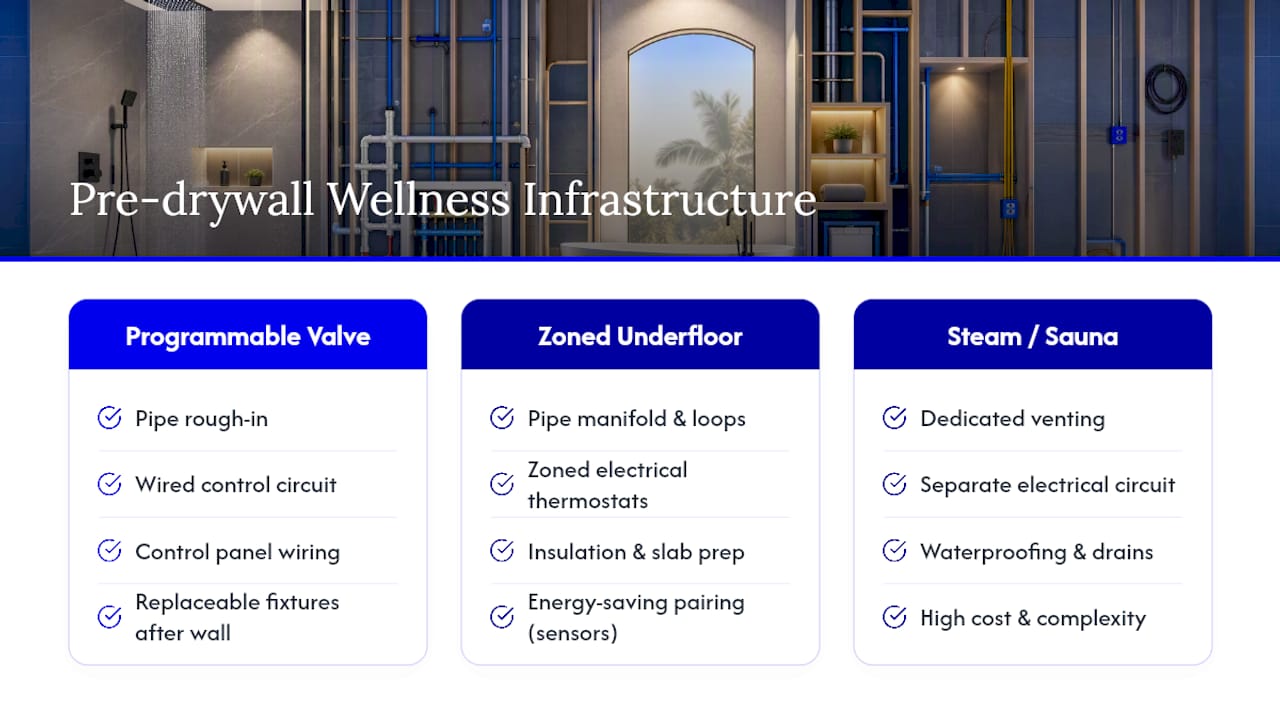
Programmable shower valves, heated floors, and home steam or sauna setups are now mainstream requests rather than luxury outliers. The distinction that matters is durable versus replaceable: plumbing and electrical infrastructure is expensive to redo later, while a shower head or control panel can be swapped without opening a wall.
Programmable valves and zoned underfloor heating need to be wired and piped before drywall goes up, which makes early planning non-negotiable. Steam and sauna installs carry the highest cost and complexity, since they require dedicated ventilation and often a separate electrical circuit.
On the eco-conscious side, thermostatic valves, leak sensors, and zoned underfloor heating are becoming standard pairings with wellness upgrades, cutting water waste and energy use without asking homeowners to sacrifice comfort.
Building Accessibility In From the Start
Reinforced walls for future grab bars, low-threshold shower bases, and linear drains cost far less when they're part of the original framing than when they're added later. Remodel Inspo's planning data backs this up directly: Many tub-to-shower conversions already factor in accessibility features (https://remodelinspo.com/blog/2026-bathroom-remodel-trends/), even among homeowners who aren't currently thinking about mobility.
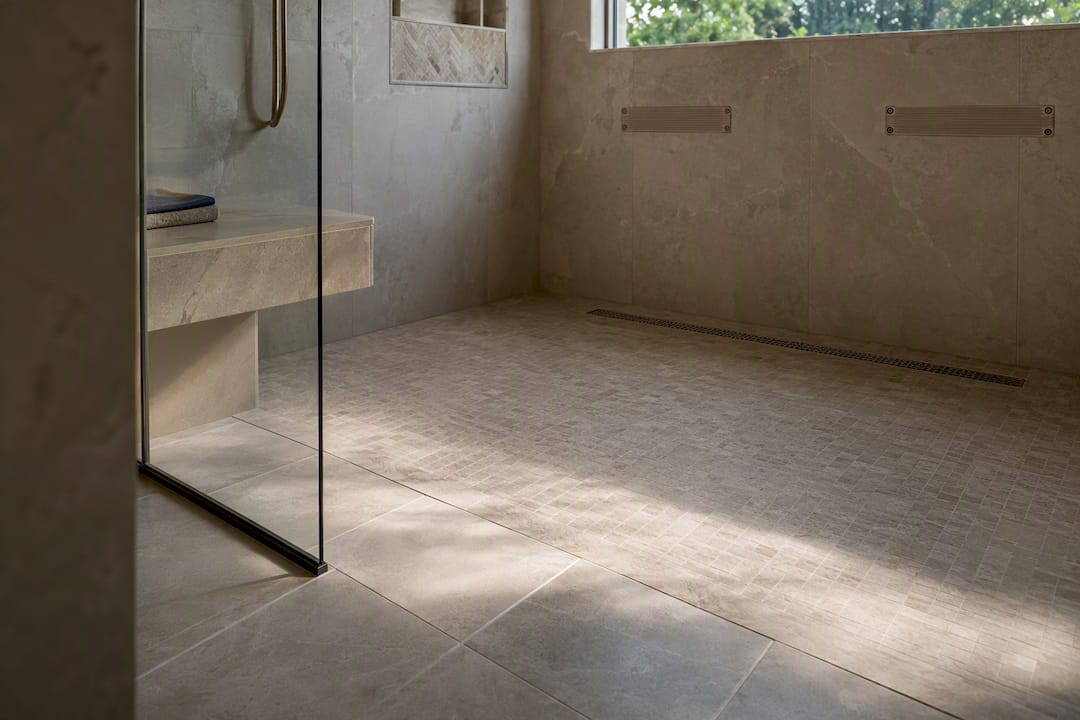
The spa-like versions of these features stay invisible by design. Integrated bench seating, continuous tile flowing into a linear drain, and pocketed toilet screens instead of visible grab bars accomplish the same accessibility goals without announcing themselves. These choices all require early framing and waterproofing decisions, so they belong in the first conversation with your contractor, not a change order six months in.
How to Apply These Trends to Your Own Remodel
The smartest way to sequence a bathroom remodel is to separate the durable layer from the replaceable one. Tile, plumbing rough-ins, and structural framing are expensive to redo and should be locked in early. Fixtures, mirrors, and hardware finishes can shift later without major cost.
- Set the structural plan first. Decide on shower footprint, drain location, and any reinforced walls before anything else moves forward.
- Commit to plumbing and tile decisions early. These are the layers that trigger rework if changed midstream.
- Budget for wellness infrastructure before finishes. A heated floor or steam unit needs its wiring and piping locked in before the fun part, picking hardware, even starts.
- Leave fixtures, lighting, and accessories for last. These are lower cost to change and where personalization tends to happen naturally.
- Plan a realistic timeline. Demo and rough plumbing typically take the longest; tile and finish work follow once inspections clear.
Remodel Inspo's homeowner data shows that 79% of planning sessions now involve moderate or major remodels rather than cosmetic refreshes, which is exactly why structural sequencing matters more this year than in past cycles.
Pro Tip: Order physical samples of your tile, stone, and hardware finishes before ordering full quantities, and set them side by side in the actual bathroom lighting. Colors and patina finishes shift dramatically under different bulbs, and a small mockup saves a much larger correction later.
What We're Seeing on Real Job Sites
We're seeing this personalization trend play out in every estimate conversation. Clients want their bathroom to fit their actual routine, not a template. Buildwithng sequences accessibility, plumbing for wellness features, and finish selection in that order, because reversing it creates change orders. At your free estimate, ask what's structural versus cosmetic in your plan, and expect a contractor to answer that without hesitation.
— Alston
Bring Your 2026 Bathroom Vision to Buildwithng
Buildwithng gives Southwest Florida homeowners a single point of accountability for turning these trends into a finished bathroom, instead of juggling separate designers, tile setters, and plumbers on your own. As a design-build contractor serving Cape Coral, Fort Myers, Naples, Bonita Springs, and Estero, Buildwithng manages the structural decisions (reinforced walls, drain placement, wellness plumbing) alongside the finish choices (microcement, patina hardware, statement tile) under one plan and one budget.
That matters most in the exact spots this article flagged as expensive to redo: shower framing, heated floor wiring, and accessibility features baked in before drywall closes. A complementary read on interior door trends is worth a look too if you're coordinating hardware finishes across your whole renovation, not just the bathroom.
If you're ready to see what your 2026 remodel actually costs and how it would be sequenced, request a free, no-obligation estimate from Buildwithng and get a project plan built around your bathroom, your budget, and your timeline.